
Dear Subscribers,
Welcome to Foundry Digest, your weekly briefing from Foundry Collective.
In this year-end edition, we examine Indonesia’s AI landscape and why local champions are emerging as the real drivers of applied AI. Drawing on insights from industry leaders, we highlight what’s working, where gaps remain, and the key ecosystem developments shaping the road ahead.
As we wrap up the year, thank you for being part of our community. We wish you a restful holiday season filled with quality time with family and loved ones, and a strong start to the year ahead.
Stay ahead,
Foundry Collective
🚀 Indonesia’s AI Landscape: Why Local Champions Will Shape the Future
Indonesia’s artificial intelligence (AI) landscape is no longer in the realm of hype. Consumer usage is mainstream, enterprises are shifting from pilots to production, and homegrown startups are exporting solutions abroad. Yet the ecosystem is still a work in progress, with meaningful gaps in deep tech talent, data practices, and capital.
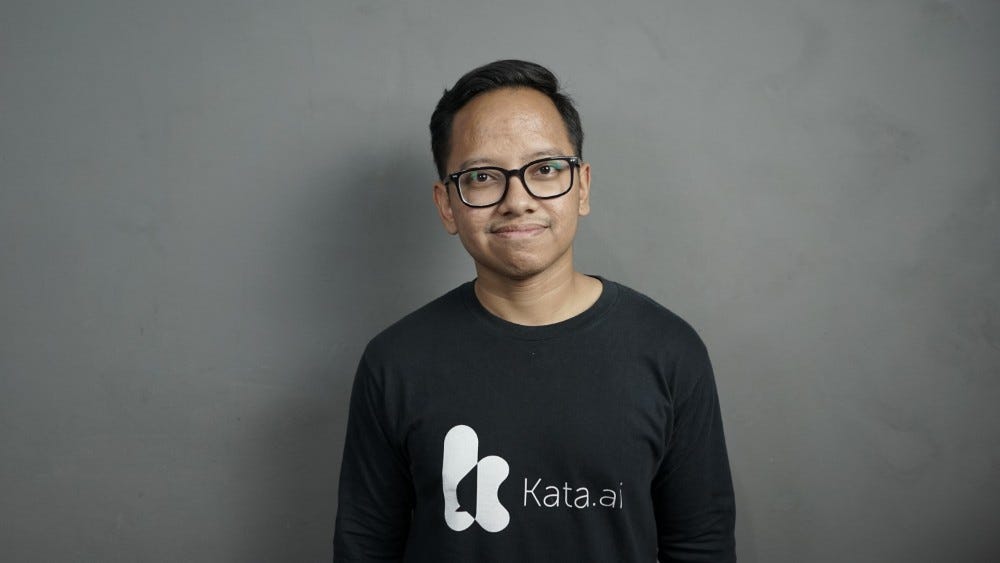
Few founders sit close to this reality, including Irzan Raditya. As Co-Founder and CEO of Kata.ai, one of Indonesia’s leading AI companies with more than 250 enterprise clients, he has seen AI evolve from simple chatbots into autonomous agents embedded in core business workflows. Kata.ai’s platform alone has facilitated around USD 2.5 billion in annualized transaction volume in payment and collection workflows.
In this interview, he shares a grounded view of where Indonesia stands, what investors really want, and how local champions can build durable competitive advantages in applied AI.
A “6.5 out of 10” Ecosystem
Asked to rate Indonesia’s AI ecosystem on a scale of 1 to 10, Irzan does not answer with cheerleading.
“I would give it a 6.5 out of 10. Adoption is real and it is not niche anymore, especially on the consumer side. But the ecosystem still has gaps in deep tech talent, production grade data practices, and repeatable enterprise delivery,” he says.
It is a picture of a market in transition. Indonesia enjoys strong “market pull”: use cases are abundant, user behavior is already digital and messaging first, and enterprises feel real pressure to automate. Yet several layers need to catch up: data governance frameworks, robust infrastructure, and a deeper pipeline of AI engineers and product leaders.
Capital constraints add another layer of challenge. Funding into Indonesian AI startups has grown, but remains modest compared with global hubs and Singapore, which attracts a disproportionate share of regional AI capital.
The Real Bottleneck: Enterprise Trust
One of Irzan’s most counterintuitive observations concerns what actually constrains founders at different growth stages.
“For seed and pre seed teams, the first major client is still harder than the first funding round,” he explains. “Early funding can happen with a strong story and compelling team, but enterprise trust is earned through security reviews, procurement cycles, integrations, uptime, and proven ROI.”
This insight flips conventional wisdom. The first institutional check may be easier to obtain than the first serious enterprise deployment. Only after clearing that hurdle does the dynamic reverse.
“At growth stage, raising capital becomes significantly harder, especially in the current market where investors expect clear unit economics, profitability paths, and repeatable growth.”
The message is stark: storytelling might unlock seed funding, but durable traction requires navigating long enterprise sales cycles, surviving security audits, and delivering measurable business outcomes.
What Investors Actually Fund
Behind the buzz around AI, investor appetite in Indonesia is pragmatic and narrowly focused. According to Irzan, the most compelling AI narratives share two traits: they are business to business, and they directly improve measurable business outcomes.
“Investors are most excited by AI tied to clear ROI, especially B2B: automation in customer operations, sales, collections, compliance, and productivity. Distribution first startups also attract attention, because in Southeast Asia, go to market is often the real moat,” Irzan says.
This has immediate implications for founders. Generic AI features without defensible distribution or deep workflow focus will struggle. Companies that own a clear wedge use case, understand local customer behavior, and can show concrete value creation will remain attractive even in tighter funding cycles.
Agents Over Chatbots
The technical shift underlying today’s AI adoption wave is the transition from simple question answering to capable autonomous agents. Two or three years ago, most AI deployments were limited to FAQs or basic routing. That era is ending.
“Two years ago, chatbots mostly answered questions. Today, agents can plan and execute multi step workflows: call tools, trigger APIs, check rules, update systems, and complete tasks. It is not just better language, it is tool use plus orchestration, so the AI can actually do the job, not just talk about it,” Irzan explains.
This shift is most pronounced in financial services, Kata.ai’s fastest growing vertical. Banking, lending, insurance, and consumer finance share identical pressures: massive customer volume, measurable workflows, and intense efficiency demands without sacrificing compliance. Messaging first customer behavior amplifies impact. Customers expect to transact inside chat. AI agents managing an entire journey from inquiry through transaction to after sales support become infrastructure, not luxury.
Three Non Negotiables for AI Success
Years of production deployments have taught Irzan three capabilities he considers essential for any serious AI company in Southeast Asia.
First is enterprise grade delivery. Security and governance cannot be retrofitted. Startups must embrace compliance reviews, monitoring infrastructure, and robust service commitments from day one.
Second is local market realism. In Indonesia, multilingual complexity, code switching, and messaging first behavior are facts of life. AI products ignoring these realities see limited adoption.
Third is quantifiable ROI storytelling, where the narrative shifts away from abstract claims about “cool AI” toward concrete business outcomes. As Irzan frames it, the focus should be on how much cost, time, or operational leakage has been eliminated. The most successful deployments back this story with clear metrics, such as higher completion rates, faster resolution times, and measurable improvements in revenue capture.
These three capabilities combine into a defensible moat that global vendors cannot easily replicate overnight.
Scaling Beyond Indonesia
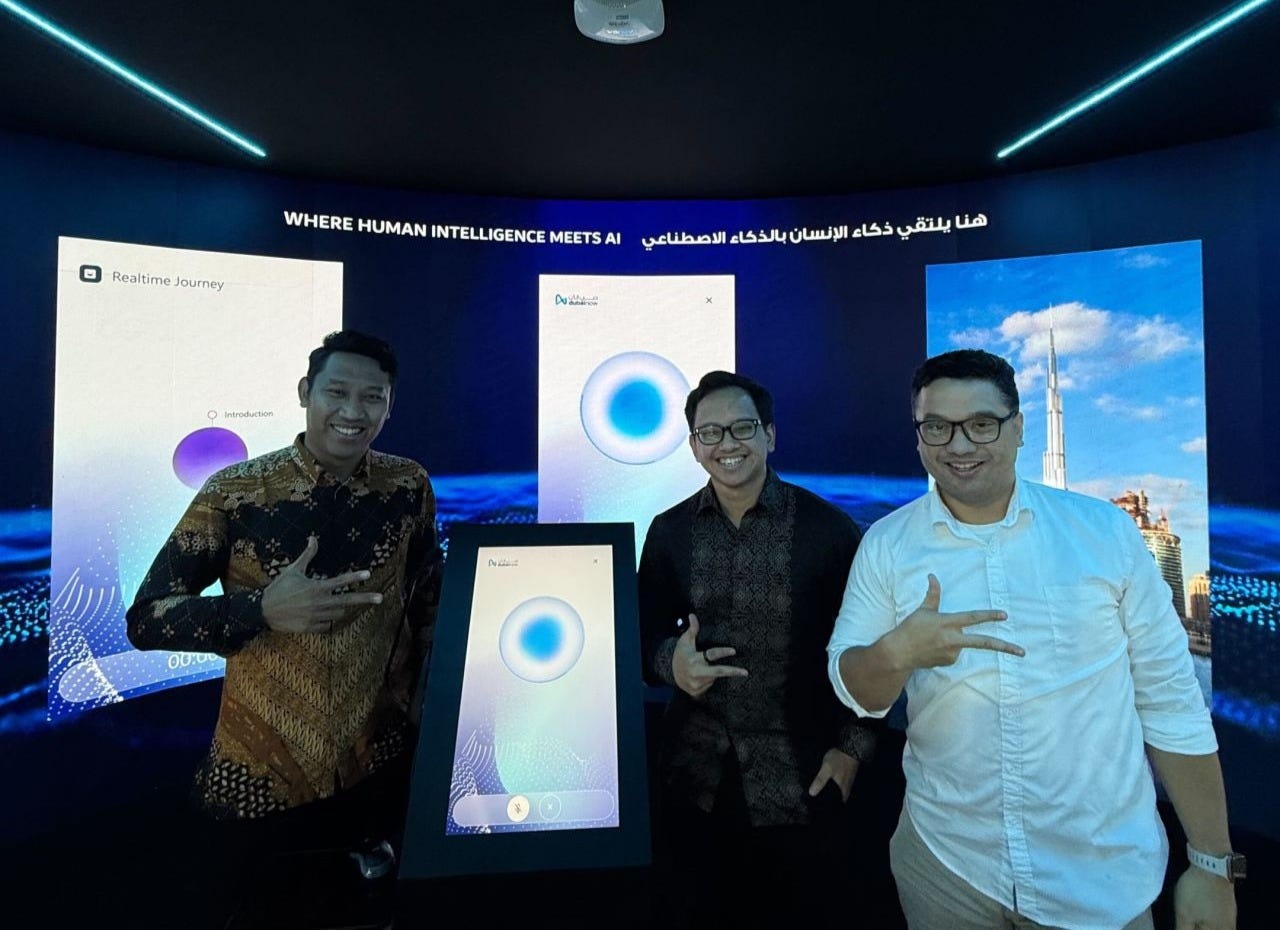
Kata.ai’s expansion into the Middle East offers a glimpse of how Indonesian AI companies can compete globally. Some elements of the playbook transfer directly. Others require careful adaptation.
“The core thesis still works: enterprises want ROI, and customer operations is the fastest place to prove it,” Irzan says. Yet Middle Eastern markets demanded a shift in delivery approach.
“The bar for procurement, security posture, and stakeholder alignment is different, and we adapted to be more structured and compliance forward,” he explains. Looking ahead, Kata.ai targets markets with Indonesia like characteristics: messaging first culture, high service volume, and multilingual complexity. This points toward Southeast Asia and select high growth regions where customer interaction is rapidly moving to chat and voice channels.
Homegrown Winners in Applied AI
A persistent question about Indonesia’s AI future is whether value will accrue to global tech giants or local startups. Irzan believes the answer reflects clear market division.
“It will be both, but I am bullish on homegrown winners in applied AI. Global players will provide foundational models and infrastructure. Local champions will win by building hyper local application layers: owning distribution, workflow depth, and local nuance,” he says.
Indonesia may never need to build its own frontier model company. What it requires are founders capable of using those models as substrate to construct reliable, sector specific systems for banks, insurers, retailers, and public services.
His boldest prediction embodies this vision: “AI becomes the default interface for daily services, like a personal operator for admin life. But the twist is trust: people happily use AI for efficiency, yet still want humans when empathy, validation, or complex decisions are involved.”
A Disciplined Path Forward
For Indonesian companies adopting AI, Irzan emphasizes focus and governance: “Start with workflows where ROI is obvious, instrument everything, and take governance seriously. Adoption is already here, but literacy and privacy awareness are uneven, so you need strong guardrails and compliance discipline.”
For entrepreneurs, his advice cuts through hype: “Do not chase hype. Pick one painful workflow, go deep, earn trust, and build distribution. If you can deliver reliability and measurable outcomes in Indonesia, you can export that capability.”
The contours of Indonesia’s AI moment are visible. Adoption is real, capital is available, and proof points like Kata.ai demonstrate that local champions can compete globally in applied AI. Whether this moment crystallizes into durable advantage depends on how quickly the ecosystem deepens talent, infrastructure, and institutional support, and whether the next generation of founders chooses depth and trust over noise and speed.
📊 Indonesia’s AI Consumer Penetration
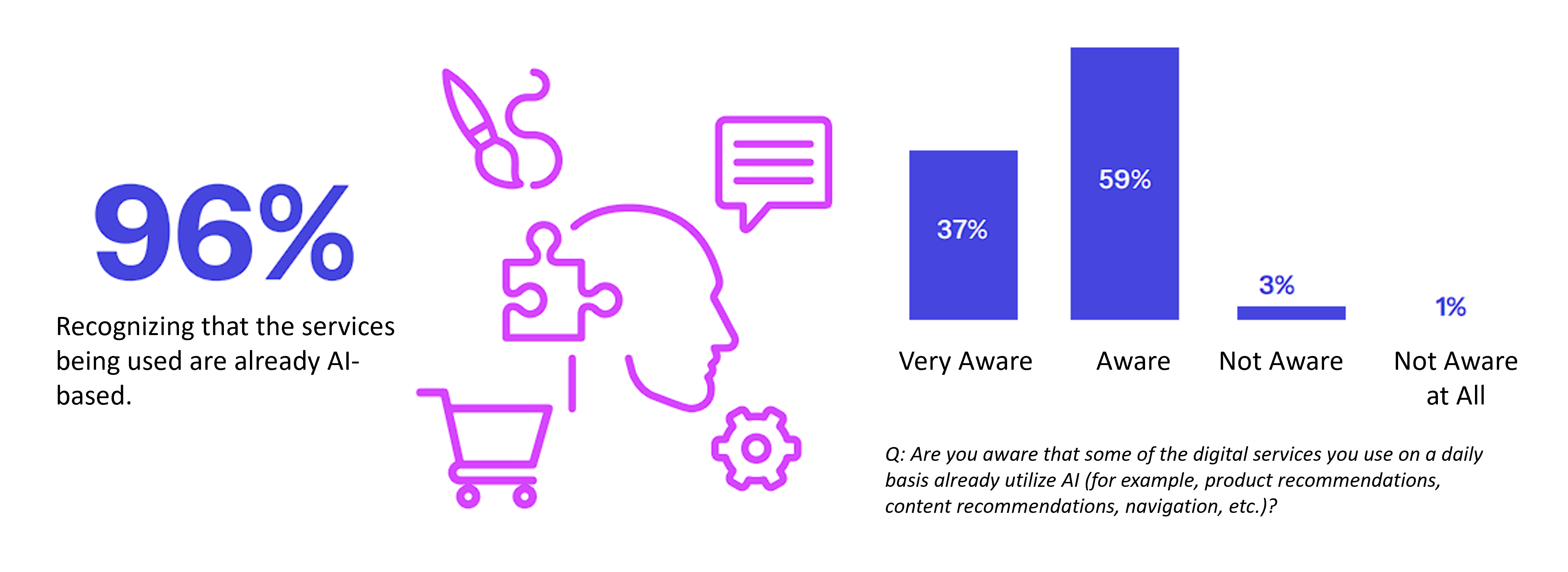
The kumparan’s Indonesia AI Report 2025 reveals AI has achieved significant penetration in Indonesia, with 96 percent of the public aware that their daily digital services are powered by AI. Generative AI chatbots lead adoption, with ChatGPT commanding 85 percent of users, followed by Meta AI at 72 percent and Google Gemini at 65 percent. Within six months, 80 percent utilized AI for information retrieval, demonstrating that AI has become the default tool for accessing knowledge.
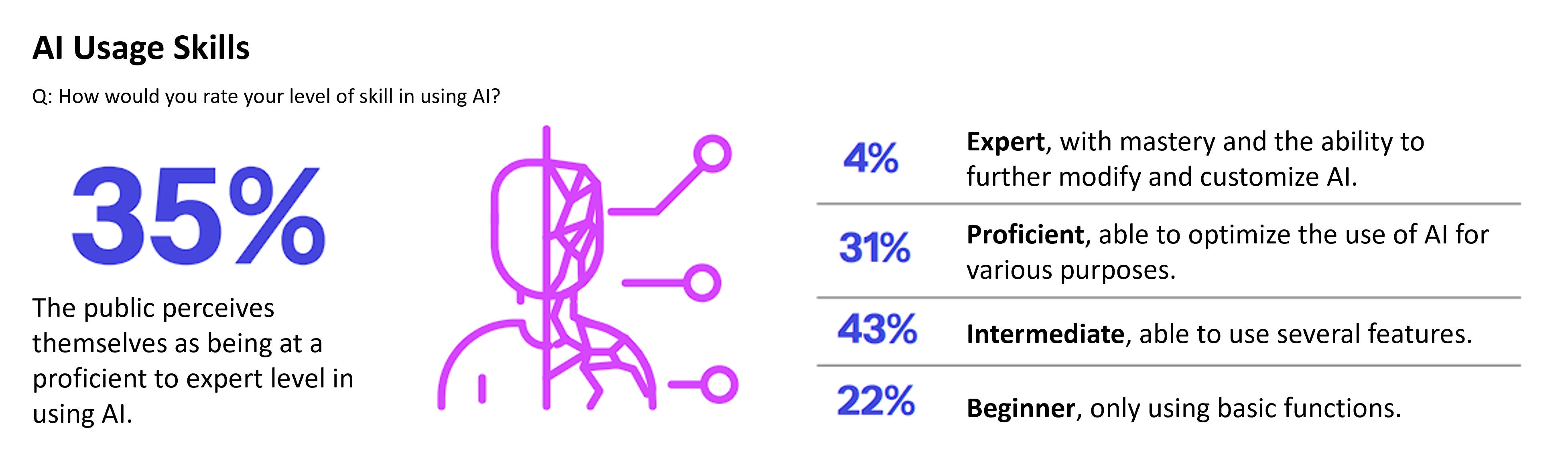
Adoption patterns differ markedly between generations. Gen Z prioritizes productive applications like coding and data analysis, while Millennials favor practical efficiency tools such as navigation and customer service chatbots. Both use AI equally for creative purposes at 61 percent for visual content creation. Usage intensity also varies, with Gen Z showing more stable integration at 35 percent using chatbots 6 to 10 times weekly, while Millennials display more variable adoption ranging from light experimentation to heavy usage.
Organizational adoption lags individual use, with only 45 percent of companies actively promoting AI despite 57 percent of workers already using generative chatbots. The Digital Media sector leads adoption support at 55 percent, while Commerce Consumer Services remain largely neutral at 60 percent. This gap reflects limited AI expertise, high investment costs, and regulatory uncertainty. Compounding this, 68 percent believe AI will completely replace their jobs within five years, yet 79 percent express confidence their current skills remain adequate.
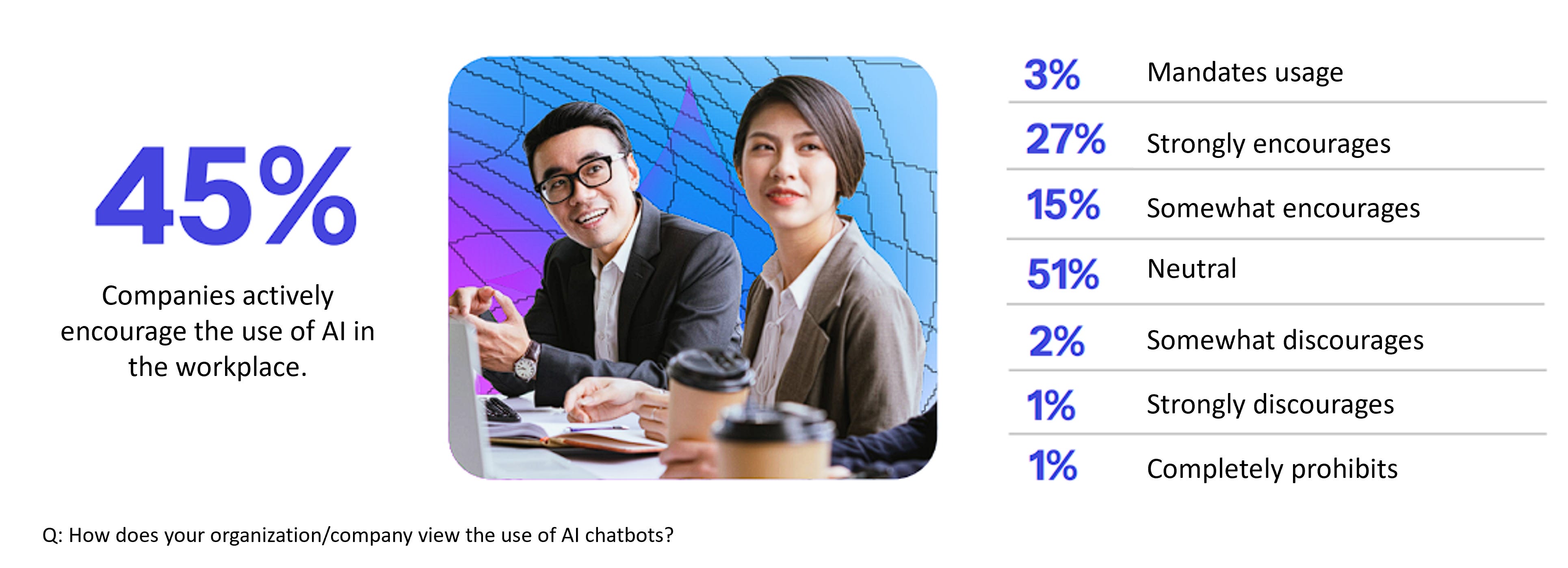
Data security emerges as the primary concern for 55 percent of users, followed by accuracy at 53 percent and cost barriers at 50 percent. Notably, 75 percent worry about deepfakes and identity fraud, while 62 percent fear personal data misuse. Learning remains predominantly informal, with 84 percent relying on social media and YouTube rather than formal courses at 21 percent, perpetuating pseudo-literacy where users feel competent but lack foundational understanding. Indonesia’s adoption trajectory will depend on whether institutional governance and education can match user-driven enthusiasm.
⚙️ Industry Dynamics
Below are several notable developments that are shaping and influencing the direction of Indonesia’s evolving ecosystem landscape.
Indonesia is preparing two key artificial intelligence regulations: an AI roadmap and AI ethics guidelines. Both are ready and are now waiting for President’s approval. The rules will be issued as presidential regulations and are targeted to be signed and published in early 2026. The Ministry of Communication and Digital said the framework will serve as a general policy umbrella, while detailed AI rules will be developed by each sector ministry according to their needs. [Read more]
Indonesia’s Finance Minister Purbaya Yudhi Sadewa plans to invest Rp45 billion to develop an AI-based system at Directorate General of Customs and Excise. The system, called Trade AI, is designed to detect under-invoicing, over-invoicing, and potential trade-based money laundering, while improving the accuracy of import analysis. Trade AI will be integrated with the CEISA 4.0 platform to speed up decision-making and strengthen customs supervision. [Read more]
Local omnichannel provider Qiscus has acquired AI voice platform Kokatto to expand beyond chat and strengthen its voice-based AI capabilities. The move responds to growing enterprise demand for managing higher volumes and more complex customer inquiries. Kokatto’s technology will be integrated into Qiscus’ platform to enhance its conversational AI stack, as businesses increasingly adopt advanced voice solutions. [Read more]
Vietnamese electric vehicle maker VinFast plans to increase its investment in Indonesia to up to US$1 billion, following the opening of its first manufacturing plant in Subang, West Java. The company has invested around US$300 million so far and aims to raise production capacity from an initial 50,000 vehicles per year to as many as 350,000 units annually. VinFast Indonesia CEO said the investment could exceed US$1 billion if market demand continues to grow, with full operations targeted to start in early 2026. [Read more]
EDENA Capital Partners has secured up to US$100 million in investment from GEM Token Fund ISA Ltd. to scale government-approved digital securities infrastructure in emerging markets. The funding will support the rollout of regulated security token offering exchanges in Indonesia and Egypt, with Indonesia positioned as EDENA’s ASEAN hub. The company plans to launch its Indonesia STO exchange and generate first revenues in early 2026, focusing on tokenized assets such as real estate, carbon credits, and bonds. [Read more]