
In a global landscape where AI funding has reached a landmark USD203 billion, the focus for forward-thinking organizations has shifted from mere experimentation to meaningful integration. The true opportunity lies in treating AI not as a disruptive replacement, but as a powerful new layer that enhances existing foundations. By adopting a mindset where AI acts as a capability multiplier, leaders can empower their teams to focus on judgment and creativity while compressing routine workflows from months into hours. This evolution marks the transition from pilots to a future of sustainable, high-impact growth where technology and human talent achieve more together.
In a nondescript office in Jakarta, On Lee brings a long operator’s lens to a fast-moving moment. He serves as CTO at GDP Venture, and CEO and CTO of GDP Labs, and over more than 14 years, his teams have evaluated over a thousand technologies across cycles of hype and adoption. That vantage point shapes his core argument that AI creates durable advantage when it is treated as a new layer built onto what companies already run, rather than as a standalone initiative competing with existing systems and ways of working.
For Lee, the fallacy of the “standalone” AI project lies in its disregard for the structural realities of the modern firm. AI rarely thrives as a standalone effort; its efficacy is inextricably linked to the digital foundations (connectivity, mobile channels, and web architectures) that organizations have painstakingly constructed over decades. Rather than a “rip-and-replace” disruption, AI is emerging as a sophisticated restorative layer, one that extracts fresh value from existing systems.
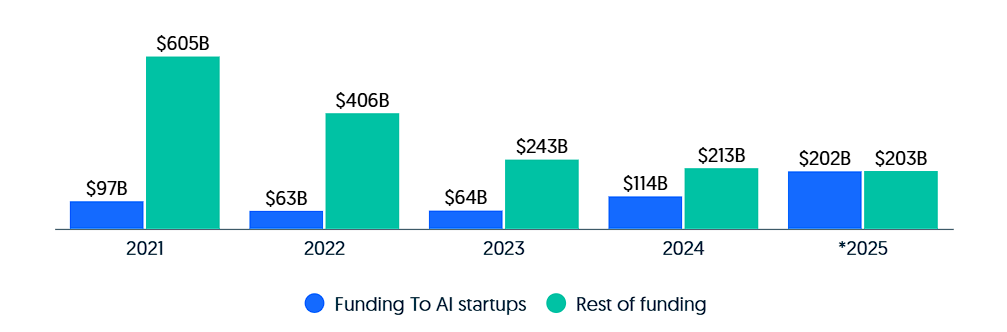
The broader market context helps explain why this integration mindset matters now. Global AI funding reached USD 203 billion in 2025, the year also revealed the “pilot trap”: a landscape littered with experimental successes that failed to scale. Yet, these early trials served a vital purpose, acting as a stress test that exposed the friction points where AI meets legacy processes and real-world accountability.
As the “easy wins” of basic automation are exhausted, the pressure to deliver meaningful returns is intensifying. The strategic implication is clear: the next edge comes from execution, integrating AI into the operating architecture with clear ownership, governance, and workflow redesign, not from launching more isolated proofs of concept.
In markets like Indonesia, this is especially promising. The archipelago is witnessing a significant digital shift, with 5.9 million businesses having adopted AI solutions in 2024, and global tech-giants (e.g. AWS, NVIDIA, Google, Alibaba Cloud, Microsoft etc) are investing heavily in local infrastructure and talent. The next wave is about depth: moving from trial‑and‑error deployments to strategic, high‑impact use cases that transform how work gets done and how value is created.
The “ABCD-X” Framework
To bridge the gap between abstract strategy and operational reality, Lee introduces a taxonomy designed for clarity: the “ABCD-X” framework. This architectural shorthand representing AI, Blockchain, Cloud, Data, and X (encompassing IoT, mobile, security, and web) defines the essential building blocks of the modern digital enterprise. Rather than submerged in the impenetrable jargon of the IT department, this framework provides the C-suite with a shared vernacular to align disparate teams and synchronize long-term planning.
Lee’s rationale is rooted in the belief that simplicity is a prerequisite for scale. In the friction-heavy environment of a large organization, messages that are easily memorized are more effectively translated into collective action. By distilling complex technical dependencies into a repeatable concept, a company ensures that its strategic vision is not just understood at the top, but implemented consistently across every layer of the business.
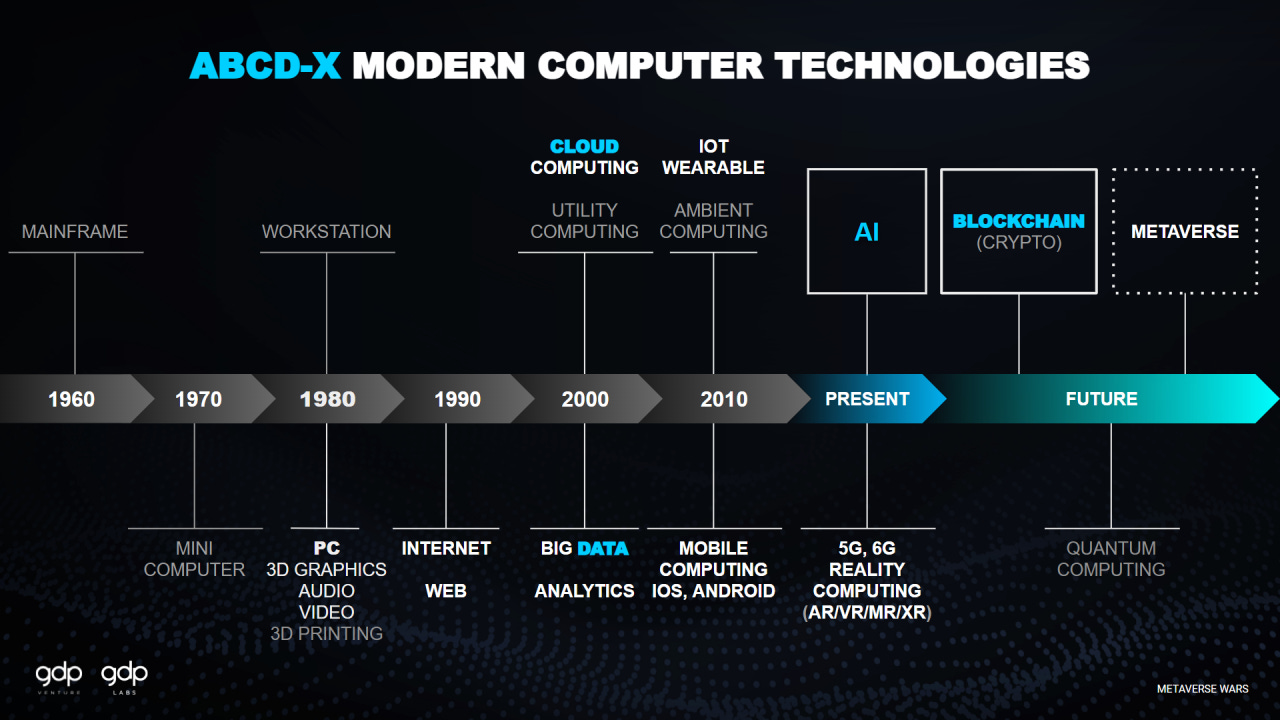
This clarity turns AI from an abstract buzzword into a practical blueprint. By situating AI as a single, integrated pillar within a comprehensive architecture (tethered to data, infrastructure, and security) organizations circumvent the common hurdles that stall the transition from pilot to production. Rather than treating it as a speculative experiment, they redesign workflows so that AI strengthens what people and systems are already doing well.
Quiet Wins with Big Impact
Once an architectural blueprint is established, the focus shifts to responsible deployment, an arena where the abstract concepts of risk and fairness meet the friction of daily operations. Lee draws a helpful distinction between the unpredictable nature of public, internet-scale AI and the controlled environment of focused, enterprise-level applications. At GDP Labs, the emphasis is placed on internal solutions that streamline financial processes and operational workflows. In these settings, AI’s benefits can be realized quickly and safely, with accountable teams and clear guardrails.
However, this internal focus does not absolve the firm of moral scrutiny. As systems take on more influence over sensitive domains, companies have an opportunity to lead with fairness, transparency, and accountability. Lee’s knife analogy serves as a reminder that technology is inherently neutral; its impact is dictated entirely by the intent of the hand that wields it.
The practical path toward seamless integration lies in pairing AI with governance mechanisms (such as risk-tiered policies and human oversight) to translate intent into predictable results. Far from a bureaucratic hurdle, this framework transforms experimental risk into a reliable operational advantage. When this foundation of trust is secured, AI ceases to be a disruptive novelty and becomes a quiet support system. Integrated into the core of the enterprise, it removes granular friction from daily workflows, allowing employees to focus on the higher-value judgment that drives growth.
Building the Right ‘Transformation’ Team
Governance and workflows are essential, but they are only as effective as the people behind them. Lee looks for the ‘golden ratio’ of talent and expertise that reliably turns AI concepts into products people actually use.
When Lee looks at AI startups, he sees one constant among the teams that break through: they combine deep technical skill with strong product and business instincts. While he values founders with serious academic or research backgrounds, recognizing that AI is built on decades of scientific foundations, Lee maintains that translating that research into everyday utility is a distinct and equally vital craft.
In Lee’s view, research skills and productization skills are distinct, and companies need to turn ideas and algorithms into tools that end users can actually benefit from. The winning formula is not science or business alone, but a deliberate mix of technical founders and teammates who can ship products, serve customers, and build durable companies.
This pattern is already visible in success stories around the world. Teams that intentionally blend specialties (e.g. data scientists, product managers, domain experts, and operators) move faster and learn faster. They respond to feedback, iterate on their solutions, and create AI systems that feel intuitive and valuable to the people who use them every day.
For emerging ecosystems like Indonesia’s, this is a reason for optimism. While there may be fewer serial founders than in Silicon Valley, each new startup cycle produces more alumni with real, hands-on experience. Over time, that compounds into a seasoned talent pool of mentors, operators, and investors who know how to turn AI ambition into durable businesses.
The Discipline of the Long Curve
Even strong teams face a long execution curve, it is here that technical sophistication must be matched by institutional commitment and adaptability. When assessing what truly defines a high-impact AI enterprise, Lee emphasizes commitment more than any particular tactical framework. In his view, founders and early team members who treat startups as a serious craft, create the conditions for greater outcomes.
This focus on “craft” over “tactic” suggests that in a field as volatile as AI, the ability to persevere through iterative failures is the ultimate competitive advantage. Lee points to the historical parallels of figures like Bill Gates and Elon Musk to underscore a recurring truth in innovation: meaningful breakthroughs are rarely the result of luck alone, but of a singular, intense focus and a willingness to navigate the complexities of the long game. For the modern founder, this means that while technical tools have never been better, the human ingredients of timing, effort, and chemistry remain the decisive factors in turning ambition into a durable business.
Evidence from workplace deployments suggests AI assistants can raise productivity in specific tasks, for example, a widely cited field study found about a 14% productivity lift for customer support agents using a generative AI tool. When managed with sensible expectations, such gains would improve the bottom line and act as a buffer against burnout, allowing small teams to remain highly effective without succumbing to exhaustion.
Lee compares startups to creative industries such as music and film: there is no perfect formula, but certain patterns (talent, chemistry, timing, and effort) show up again and again in success stories. For AI founders, this is good news. It means that while luck plays a role, there is a lot that can be intentionally designed: assembling the right mix of people, choosing the right problems, and staying close to customers.
Partners, Not Replacements
As AI matures, its role is evolving from a passive tool into an “agentic” system—what Lee describes as a “digital colleague” capable of initiative and multi-step workflows. These agents act as tireless teammates rather than standalone tools, a shift that Gartner has designated as a defining technology trend for 2025.
Gartner forecasts that within four years, AI agents will autonomously handle 15% of daily workplace decisions, up from virtually zero today, a shift already visible as Human Capital Management platforms begin coordinating mixed teams of humans and AI agents as a single, blended workforce. For the employee, this evolution offers relief from routine, time-draining tasks. For enterprises, however, the implications are far more profound. The question is no longer whether AI will displace human workers, since Lee argues persuasively that wholesale replacement remains impossible, but how quickly organisations can augment their workforce with these digital counterparts. In this new landscape, the competitive reality is binary: humans equipped with AI will inevitably outperform those operating without it.
Lee frames the opportunity as a capability multiplier: when a mid-level contributor pairs with AI, output can improve in quality and speed. Tasks that once took months can compress into weeks or even hours, depending on context and governance.
This evolution suggests a significant shift in competitive dynamics. Research increasingly quantifies these productivity gains, revealing that the ultimate advantage belongs to those who learn to collaborate with AI rather than those with the largest budgets. In this new landscape, a lean, well-equipped team of humans and “digital employees” can effectively challenge much larger incumbents. The encouraging takeaway for the modern enterprise is that strategic agility, rather than sheer capital, has become the primary driver of market edge.
A Practical Playbook for the C‑Suite
Predictions offer a useful horizon, but the immediate challenge for leadership is operational: what must be done to secure a competitive edge? For executives navigating this shift, Lee advocates for a pragmatic roadmap focused on personal intuition and strategic partnerships:
Start learning personally: Leaders should not outsource their understanding of AI. True strategic intuition only forms when an individual engages with the technology personally to observe its impact on speed and decision-making. This is a matter of urgency.
Prioritize high-value use cases: Rather than launching isolated experiments, focus on a limited number of concrete workflows where AI can be integrated into the existing system for visible impact.
Leverage Strategic Partnerships: Organizations often achieve superior outcomes by combining “internal champions” with external specialists rather than building from scratch. Specialized vendors provide proven patterns and ready-made integrations, while internal teams provide the necessary context and data. This collaborative model significantly accelerates the move from idea to impact.
An important mindset shift is to treat AI less as a one-time project and more as an ongoing capability. Just like the internet or mobile, AI becomes a new layer in the company’s operating system. As teams gain experience, they can expand from early wins to more ambitious transformations across the value chain.
The Two-Tier Economy
That playbook matters because adoption is already uneven, and Lee sees a widening gap between organizations that have successfully integrated AI and those stalled in perpetual experimentation. In Southeast Asia, and particularly in Indonesia, the stage is set for a strong AI growth story where startups and digital-first companies are deploying AI to build new products and services. Fintech firms, for example, are improving fraud detection (e.g. Sxored.ai, Verihubs, etc), credit scoring (e.g. Skor Technologies, Aiforsee etc), and personalized finance (e.g. Vida, Privy, etc) , increasing accuracy while lowering operational costs, and these are increasingly local, real-world applications rather than distant case studies.
Large enterprises are also moving, but at a different pace. Their challenge is less about interest and more about complexity, including existing systems, regulatory requirements, and organizational structures. Once these companies solve the integration puzzle, their scale becomes a powerful asset, enabling them to move from cautious pilots to organization-wide AI programs.
Across the broader market, adoption remains uneven, mirroring the typical absorption cycle of any nascent technology. Companies built on digital services, such as banking and insurance, feel the impact of AI more acutely and immediately, while businesses centred on physical goods retain a longer window for adaptation. ‘Moving up’ for the middle tier is therefore less about hype and more about execution, clarifying use cases, integrating AI into the overall system rather than treating it as an isolated experiment, and building enough internal capability to scale beyond pilots.
Choosing to Lead with AI
All of these strategic threads converge into a singular, binary choice: integrate AI into the operational fabric of the firm, or fall behind those who do. Ultimately, the real divide in the global economy is not between companies that “have” AI and those that do not; it is between those that embed AI into their core operations and those that remain perpetually on the sidelines. This distinction extends to the individual level, separating teams that treat AI as a “digital colleague” and capability multiplier from those who cling to an outdated baseline.
The encouraging reality is that this remains a choice leaders can make today. The playbook for success is now clear: start with serious, small-scale applications, align technology with tangible business problems, blend deep technical skill with commercial intuition, and commit to an accelerated learning curve. By shifting from isolated experiments to an integrated architecture, organizations can transform AI from a speculative hazard into a durable competitive advantage.
The future of growth belongs to those who choose to integrate, not isolate. Lee’s bottom line is that advantage accrues to teams that integrate AI into daily workflows, because the productivity gap compounds fast.