
Indonesia’s technology ecosystem is entering 2026 with a clearer picture than it had a year ago. The past two weeks offer a cross-section: funding rounds, GMV figures, regulatory filings, and workforce agreements that read together, describe an economy where stronger business fundamentals are reinforcing each other across sectors.
The pattern is one of steady compounding. Business discipline is improving. Capital is becoming more selective. Regulation is moving toward enabling rather than restricting. Each development is incremental. Their direction is consistent.
Consumer Tech: The Profitability Cohort Takes Shape
Several Indonesian consumer brands are hitting the same milestone at the same time. Companies that found their footing two or three years ago are now demonstrating, at scale, that their business models actually work.
The potential for technology-enabled retail to generate sustainable cash flows at scale is no longer theoretical. At a revenue base of roughly USD184m, a coffee-chain leader like Kopi Kenangan has demonstrated that the model can turn profitable in a market of 270 million people. Profitability at this scale confirms a model that was once only aspirational. Technology-enabled consumer retail, operated with discipline in a market with substantial population density, can generate sustainable cash flows. For investors who questioned whether the unit economics were real, this is a direct answer.

Jago Coffee’s reported Series B of around USD12.5m, led by BEENEXT, and Green Rebel Foods’ USD12.5m raise occupy a different point on the maturity curve, but the capital is making a similar bet. Execution quality in the consumer segment is now the differentiator, not category novelty. Hypefast, meanwhile, is building toward a 2027 IPO as an integrated retail infrastructure player, which suggests its investors believe the public markets will reward that model by then.
The counterpoint is instructive. BeautyHaul, parent of Somethinc, is exploring a partial or full sale, with Peak XV Partners and Prosus Ventures evaluating their positions. Strong product-market fit and brand equity have not insulated the company from the broader shift in venture capital toward profitability-first underwriting. The situation illustrates that even category leaders need to adapt when the capital environment changes. Strategic optionality, defined as knowing what options are available and when to exercise them, is increasingly part of how boards and founders need to think about company positioning.
Taken together, the cohort tells investors something useful. Quality of growth is being priced differently than growth itself. That is a healthier signal than the alternative.
Food Delivery: Structural Depth, Not Just Scale
Indonesia’s food delivery sector reached USD6.4bn in gross merchandise value in 2025, according to Momentum Works estimates. The more significant story sits in what is driving that number.
The expansion of food delivery in Indonesia is not primarily a platform story. It is an SME story. Warungs, home-based kitchens, and local brands are now operating at national-scale visibility through delivery apps, converting Indonesia’s culinary diversity into a repeatable digital asset. The resilience of that demand base, distributed across hundreds of thousands of micro-merchants rather than concentrated in a handful of brands, is what makes food delivery a structurally different business in Indonesia than in most markets.
For investors, the implication is that platform GMV here is anchored by a broad base that does not evaporate in a macro downturn the way discretionary consumer spending does.
Content-as-Commerce: Maturing Monetization and Regional Adoption
Social commerce in Southeast Asia has evolved into a sophisticated marketplace ecosystem where content and transaction are fully integrated, as evidenced by a 94% year-on-year increase in global GMV for platforms like TikTok Shop. TikTok Shop recorded a global GMV of USD64.3bn in 2025, with the United States as the largest single market at USD15.1bn. Indonesia was close behind at USD13.1bn, with 111% growth, the highest rate among major markets.

Southeast Asia as a whole contributed USD45.6bn, roughly double the prior year. Malaysia grew 132%, Indonesia 111%, and Thailand 101%. Within the platform, live commerce grew from 10% to 14% of GMV, marketplace increased from 32% to 36%, while video’s share fell from 58% to 50%. This reflects a maturing monetisation mix rather than dependence on a single channel.
One figure worth noting is that Indonesia’s GMV is nearly equivalent to the United States in a market with substantially lower per-capita income. Rising incomes and deeper logistics infrastructure will continue to expand the addressable market from here. What the current numbers confirm is that content-as-commerce has found genuine product-market fit in Southeast Asia, with Indonesia among its most active markets.
Green Technology: Steady Capital in a Cooling Market
Overall startup funding in Southeast Asia has declined from its 2021 to 2022 peak. Green technology has not followed. Climate tech and the combined energy and mobility segment account for an estimated 10 to 15% of total funding value in the region, or USD700m to USD1bn, with 8 to 12% of deal activity. The year-on-year movement in those figures is notably flat, which in the current environment is a form of outperformance.
The integration of climate risk into corporate strategy is driving a shift toward battery-swapping infrastructure and electric mobility solutions. Companies like SWAP represent the initial deployment phase of this hardware-heavy transition. The explanation is structural, not cyclical. Long-term energy transition commitments, government co-investment frameworks, and the integration of climate risk into corporate strategy are creating demand for green capital that is less sensitive to interest rate environments than consumer or fintech investment. Indonesia’s position as a resource-rich economy with substantial renewable energy potential and a growing manufacturing base means the country is both a natural laboratory and a credible deployment destination.
The bar for quality in green tech is high. Investors are underwriting companies with measurable decarbonisation pathways and viable unit economics, not impact narratives. Founders in this space should treat that as useful information. The capital is there and it is patient, but it requires discipline of the same kind that is repricing consumer tech right now.
Private Credit: Filling the Gap Between Equity and Debt
The Indonesian capital stack is maturing to include a middle-tier of financing that supports M&A and inorganic growth for companies past the early venture stage. Recent strategic moves by firms like Qverse to expand into private credit illustrate this shift toward more complex, non-dilutive capital instruments. Qverse, an Indonesian venture debt firm, announced in February 2026 a strategic expansion into private credit alongside a new Singapore office. The shift broadens its mandate to larger funding tickets and M&A-oriented capital structures, moving beyond its original focus on venture debt toward instruments that support inorganic growth.
This is worth watching not for Qverse specifically, but for what it represents in the broader financing landscape. Companies at the scaleup stage, past seed and Series A and not yet near IPO, frequently require capital that sits between traditional venture equity and bank debt. Equity dilutes at the wrong moment. Bank debt requires collateral and covenants that fast-growing companies cannot easily satisfy. Private credit, structured correctly, fills that gap.
Several debt-focused firms in Southeast Asia are making similar moves. The pattern suggests the region’s capital stack is maturing and that the menu of financing instruments available to founders is expanding beyond the binary of VC equity and bank loans. For founders navigating a growth stage without a clear path to the next equity round, that expanded menu has practical implications now.
Semiconductor Design and the Strategic Workforce Mandate
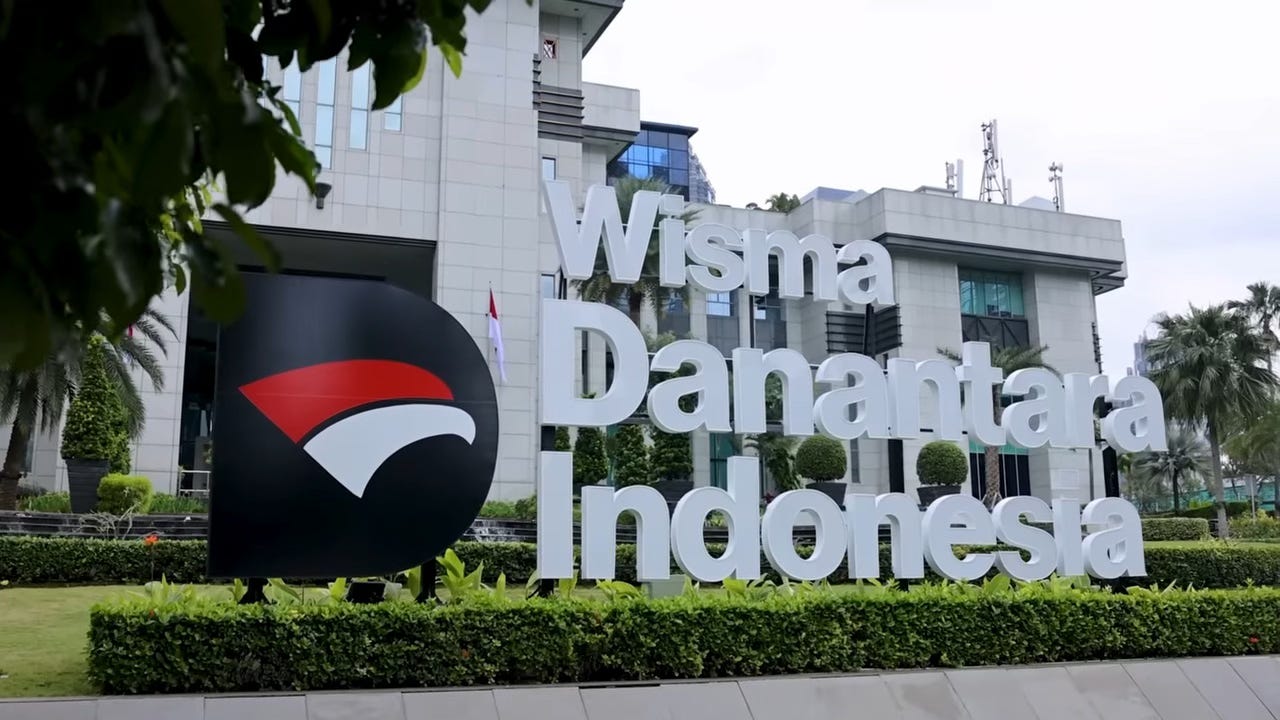
Indonesia’s move up the technology value chain is increasingly focused on high-value intellectual property development in the semiconductor space. The recent 15,000-engineer training initiative signed between Danantara and Arm Limited signals a transition from simple skills transfer toward domestic chip design capacity. On 23 February 2026, President Prabowo Subianto attended the signing of the cooperation agreement between Danantara and Arm Limited in London. The partnership centres on training 15,000 Indonesian engineers in semiconductor design, with a focus on automotive, IoT, data centres, autonomous vehicles, and quantum computing.
The ambition addresses a real gap. Semiconductors underpin every advanced technology sector, and building a domestic pipeline of chip design talent is a logical priority for an economy aiming to move up the technology value chain. The focus on intellectual property development, rather than just skills transfer, indicates the intent is to create durable assets.
As with any large-scale workforce initiative, execution will determine the outcome. Agreements of this scope involve extended timelines, inter-institutional coordination, and the challenge of building competitive technical depth in a globally specialised field. The signing establishes direction. Progress will be worth tracking as training programmes get underway and the first cohort of engineers begins working within the Arm ecosystem.
Governance and Capital Markets: Why The Reset is Constructive?
Recent capital market turbulence and regulatory scrutiny are prompting a constructive response from Indonesia’s market institutions.
OJK, IDX, and KSEI are accelerating reforms around market integrity, reporting standards, and oversight mechanisms, in part as a direct response to feedback from global index providers including MSCI. The intent is to raise governance standards in ways that improve Indonesia’s standing with institutional investors over time. Markets with stronger oversight frameworks tend to attract deeper and more stable participation from international capital.
The practical implication for listed companies and late-stage startups is sharper than it might appear. Boards and founders are being asked to formalise governance structures that were previously optional. In a market where many technology companies remain founder-led, this is a meaningful shift. The willingness to build institutional controls is increasingly a signal to investors. It is not a concession to bureaucracy, but a prerequisite for the kind of capital that supports sustainable scale.
Regulation as Architecture, Not Enforcement
Bank Indonesia is reinforcing the payment systems industry through ICT-based regulatory reform under the Indonesia Payment System Blueprint 2030 and the P2P Law. New regulations taking effect from March 2026 are designed to ensure resilience and security in a digital payment ecosystem that is growing faster than most of its predecessors. The central bank is pairing those rules with industry capacity building and cross-sector coordination, a combination that suggests it understands the difference between writing rules and building systems.
Otoritas Jasa Keuangan has issued POJK No. 30/2025 and SEOJK No. 34/2025 to strengthen governance, risk management, and business planning across technology-based financial innovation and digital financial asset sectors. These rules take effect from July 2026. For fintechs and digital asset platforms, the message is clear and, for the most part, fair. Growth is welcome; it must rest on controls that can withstand scrutiny.
The pattern across both regulators is deliberate. Indonesia is not trying to slow its digital economy. It is trying to make it harder to break. For global investors assessing the risk framework, that distinction matters more than any individual rule.
What The Last Two Weeks Add Up To
The developments of the past fortnight are individually incremental. A profitability milestone. A consistent funding theme in green tech. A broadening capital stack with private credit entering the picture. Regulatory frameworks being tightened in ways that support long-term confidence. A workforce agreement with meaningful upside if executed well. Platform GMV that confirms the durability of digital consumption habits.
Together, they describe an economy where the conditions for durable growth are being put in place with more consistency than at any prior point in Indonesia’s digital economy cycle. That consistency is a meaningful signal.