
Dear Subscribers,
Welcome to Foundry Digest, your weekly briefing from Foundry Collective.
In this edition, we explore how Indonesia’s young farmers are reshaping agribusiness through system-driven agriculture and practical technology, examine the country’s evolving agrifood landscape and its global positioning, and highlight key ecosystem developments.
Stay ahead,
The Foundry Team
🚀 Inside the Millennial Revolution Transforming Indonesia’s Agribusiness
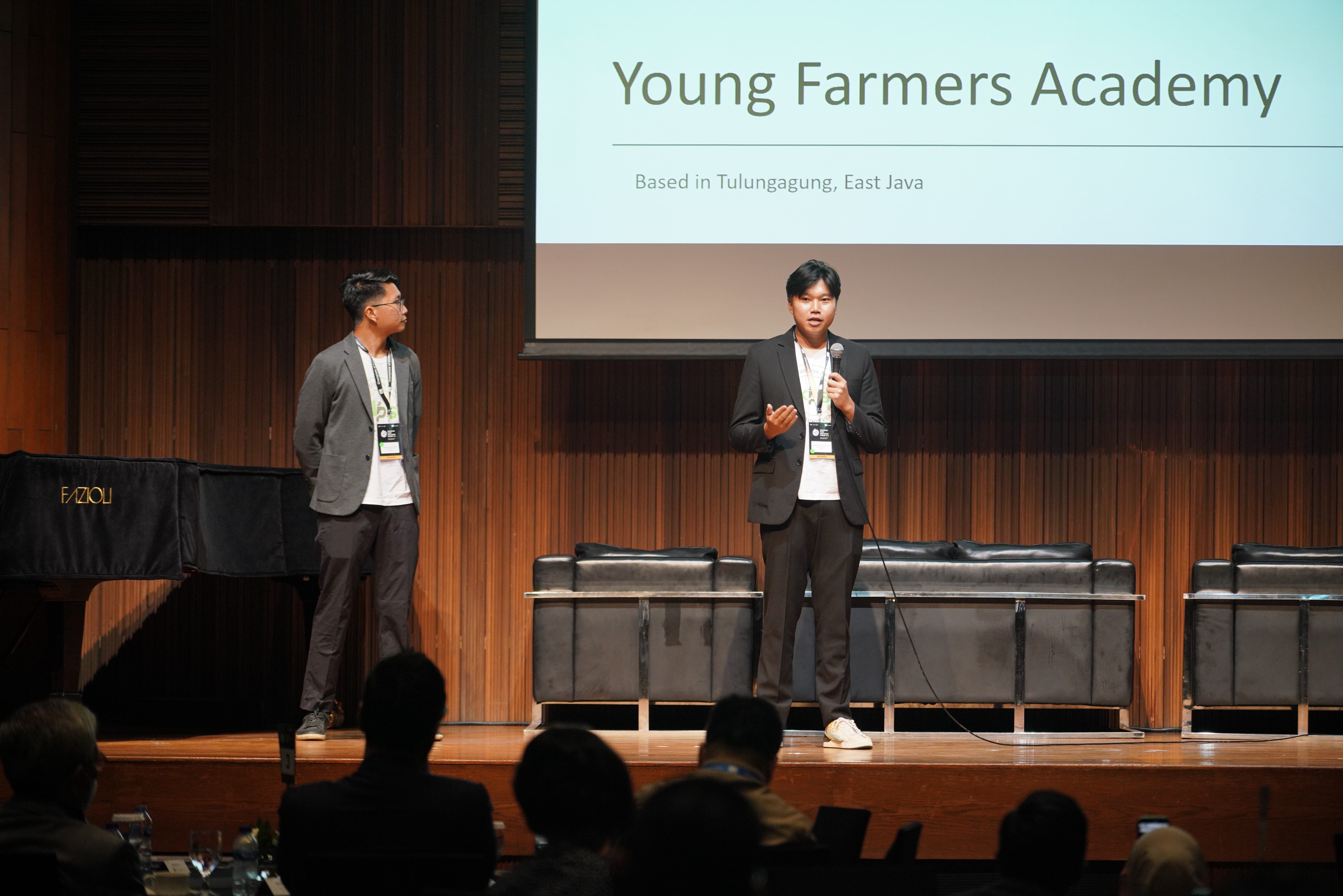
In a modest greenhouse built on family-owned land, Felix, together with his brother Billy and fellow young farmers Calvin and Natalia, is rewriting the script of traditional farming. All four are part of the Young Farmers Academy, a millennial farmer group nurtured by Kreasi Pangan that equips emerging growers with practical skills and structured guidance. None of them come from agricultural academic backgrounds. Their fields of study range from graphic design to fashion and urban corporate careers. Yet they share a conviction that modern farming shaped by practical technology, systematic management, and strong market networks offers a new and promising future for Indonesia’s agribusiness sector.
From “Muddy and messy” to “Agritech with Measurable Outcomes”
The conventional image of Indonesian farming often revolves around physical labor, hot weather, and unpredictable income. This perception deters many young people from entering the agricultural sector. The interviewees highlight that one of the most significant changes is the adoption of system-based agriculture. They now use standard operating procedures, detailed record-keeping, structured workflows, and streamlined supply chains. These elements transform farming into a data-driven profession where decisions become measurable and margins predictable.
Indonesia’s 2023 Agricultural Census shows that only 21.9 percent of farmers are aged 19 to 39, a reminder that young farmers exist but that structured regeneration is urgently needed.
On the ground, technology does not automatically mean expensive IoT devices or full automation. For these young farmers, the most impactful improvements come from environmental control through greenhouses and hydroponic systems. These methods provide consistent yields and high-quality produce for premium markets. As Felix explained during the interview, “If we want to play in a premium market, we must ensure consistent harvests.”
The team approaches technology with financial discipline. Essential tools such as sensors or exhaust systems are prioritized, while high-cost automation is postponed until the farm reaches a larger scale. Early progress comes instead from simple digital tools like Google Sheets and field data logs.
Promising Numbers Balanced with Real-World Risks
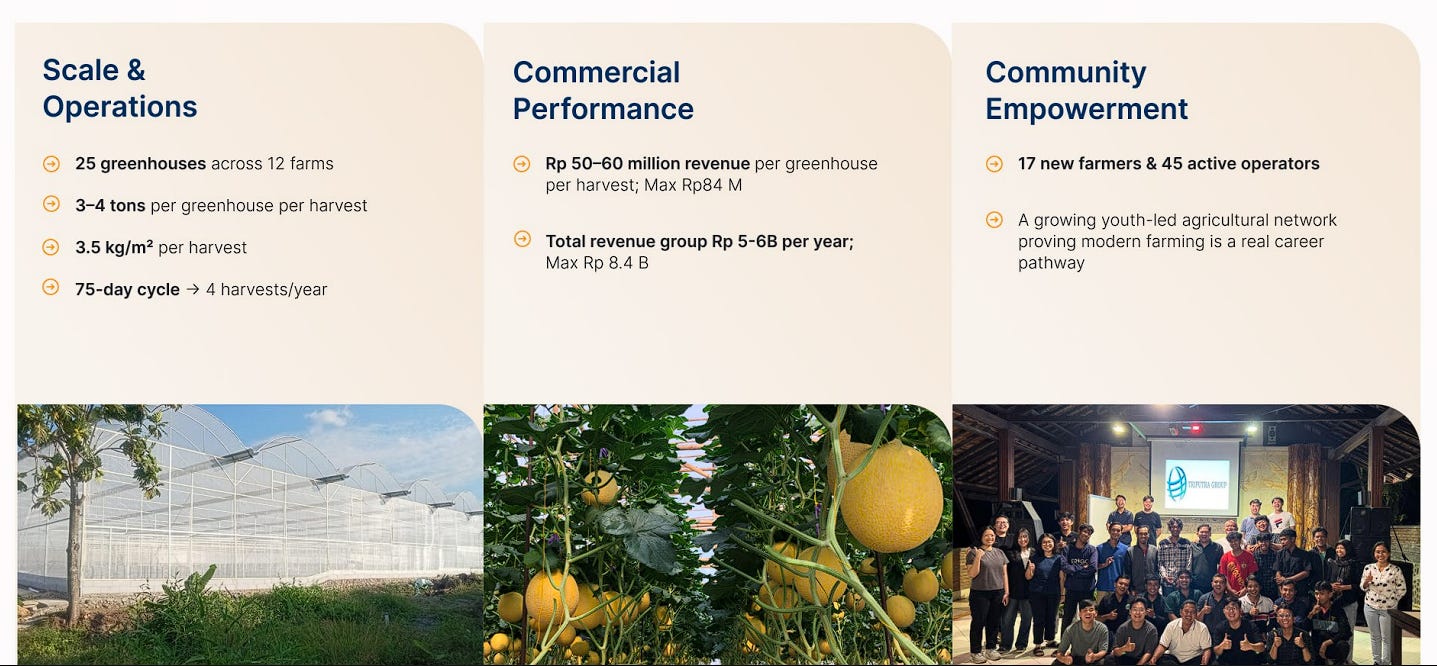
The interview provides rare transparency into greenhouse economics. For a unit of roughly 1,000 square meters, the team reports:
Revenue of around Rp60 to 70 million per cycle
Operating margins of 40 to 50 percent
Net profit of Rp30 to 35 million per cycle
These numbers help explain the rising interest among young professionals who view agribusiness as a viable and scalable career. However, challenges are real. Greenhouses require substantial initial investment and market fluctuations must be managed with discipline.
Partnerships with off-takers bring farmers more stability and predictability. They provide clear product standards and consistent pricing that farmers can use for planning future cycles. This stability is crucial, especially when compared with the unpredictable payment patterns in traditional markets.
Knowledge Transfer By Simplifying Complex Technical Concepts
Another important insight from the millennial team is the way they train their operators. Instead of hiring workers with prior farming experience, they prefer people who are not influenced by outdated techniques.
According to Billie, “We simplify the SOPs so that even people without an agricultural background can understand them.”
Training includes classroom learning, hands-on practice, and written tests. This approach ensures that the system can be replicated consistently as the business grows.
Young women are also stepping confidently into agribusiness roles. Natalia shared her experience of breaking stereotypes and embracing the work despite outdoor challenges: “My foundation shade went two levels darker, but in the end it was worth it.”
Her perspective highlights the increasingly inclusive environment emerging in modern agriculture.
Why Millennials Choose Farming
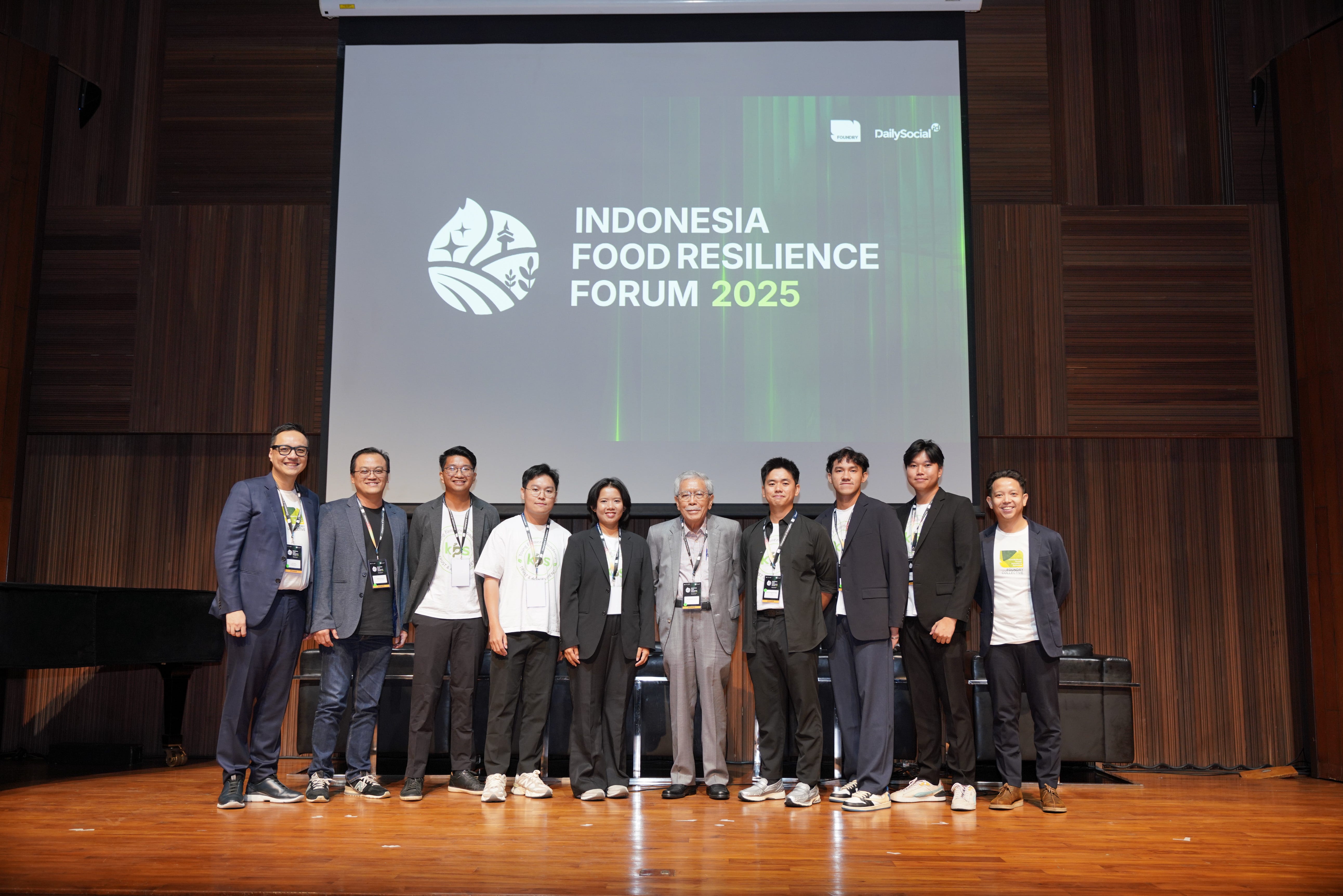
Many of the interviewees left comfortable city lifestyles to pursue agribusiness. Their motivation is long-term impact and the opportunity to build something meaningful. Calvin noted the industry’s resilience in an age of automation.
“This is one of the few industries that cannot be replaced by AI. Robots will become our partners in advancing this industry together,” said Calvin.
The transformation in Tulungagung results not from a single breakthrough but from a series of practical reforms. System-driven management, simplified knowledge transfer, appropriate technology adoption, and consistent market partnerships are reshaping agribusiness into an attractive path for Indonesia’s younger generation.
Billy expressed with conviction, “Agriculture can be a highly profitable sector, as long as you know how to manage it and how to distribute the products.”
Their story suggests that the future of farming in Indonesia depends on more young people stepping forward with the willingness to learn, innovate, and lead.
📊Indonesia’s Agrifood Landscape: Top Commodities and the Big Players
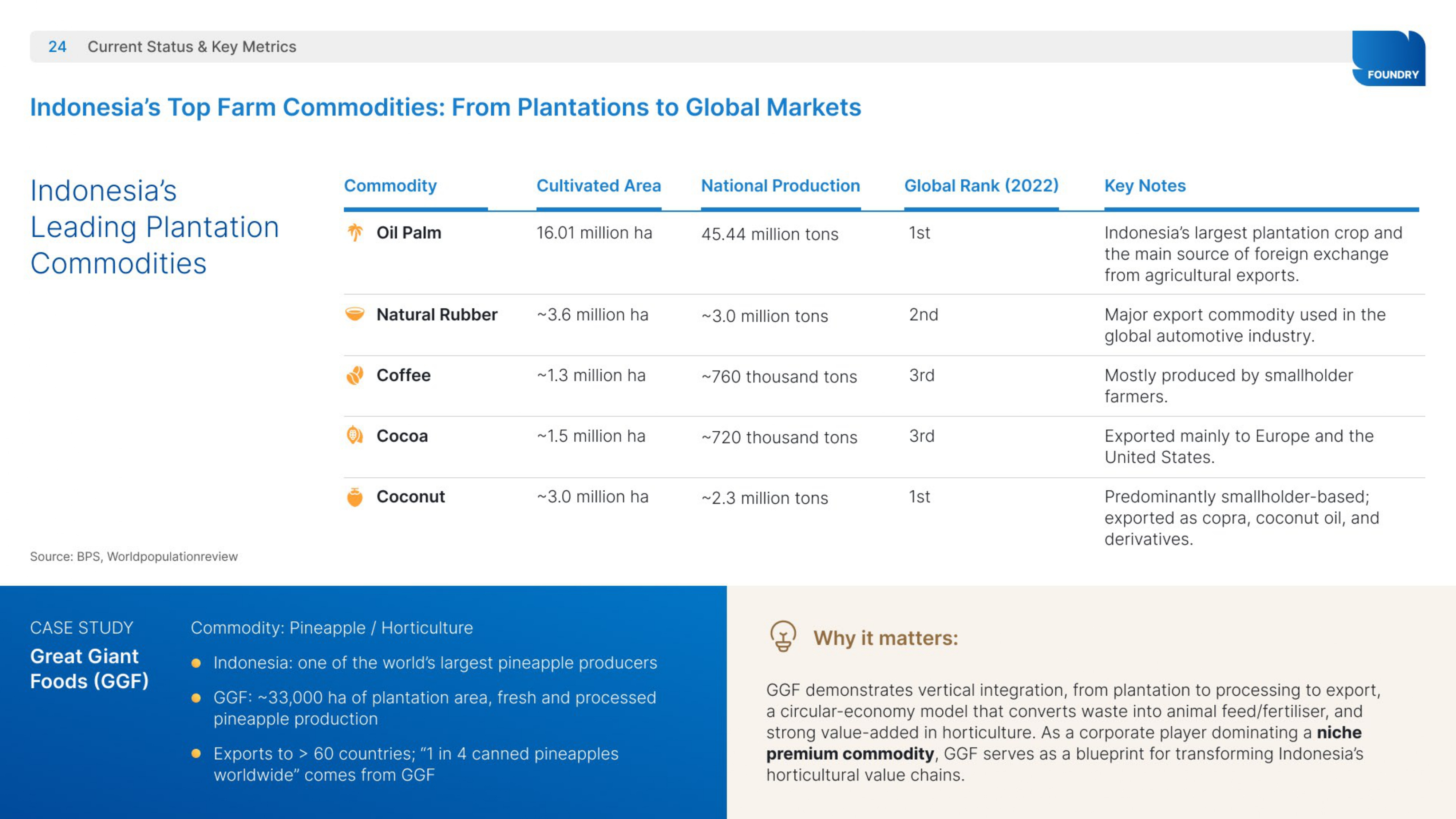
Indonesia’s agrifood sector is built on several major plantation commodities that play an important role both nationally and globally. Oil palm is the largest, with 16 million hectares of cultivated land and 45 million tons of annual production, making Indonesia the world’s top producer. Other key commodities such as natural rubber, coffee, cocoa, and coconut also rank among the top three globally. Many of these crops are grown by smallholder farmers, showing how strongly the sector supports rural livelihoods.
The data from the Food Resilience Report 2025 also shows how large corporations shape Indonesia’s agrifood economy through scale and integration. Companies like Wilmar, Golden Agri-Resources, and Astra Agro Lestari lead in palm oil and oleochemicals and have strong export performance. Diversified food companies such as Indofood and Mayora strengthen Indonesia’s presence in global processed-food markets, while firms like Charoen Pokphand and Japfa drive growth in poultry, feed, and livestock. Together, these players highlight a sector that is becoming more integrated and export focused.
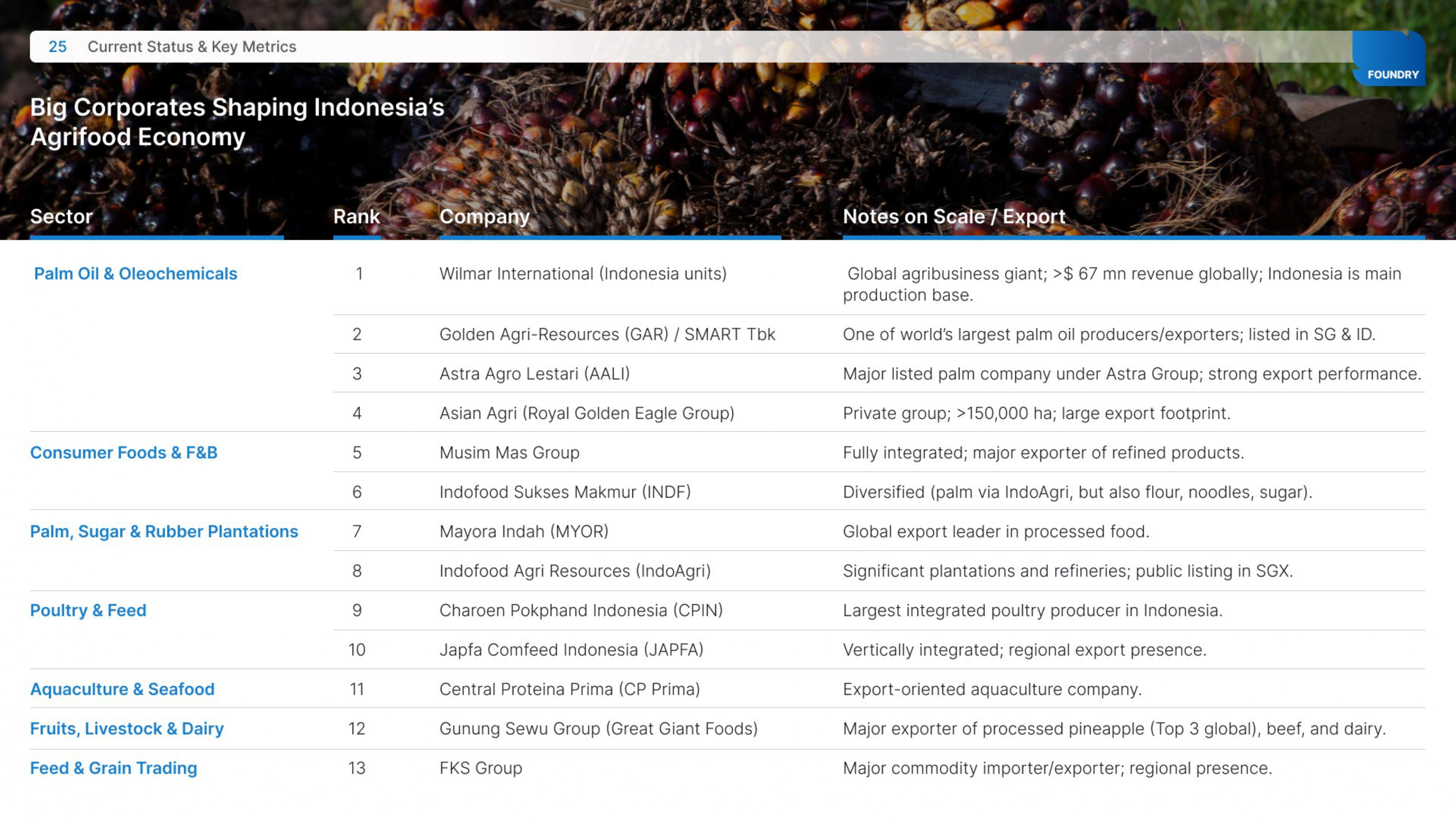
The case study of Great Giant Foods (GGF) shows how modern agrifood models can raise the value of Indonesia’s agricultural output. GGF manages about 33,000 hectares of pineapple plantations and exports fresh and processed products to more than 60 countries. The company produces roughly one in every four canned pineapples sold worldwide and operates using a circular economy system that turns waste into feed and fertilizer. This example demonstrates how innovation and value-added processing can strengthen Indonesia’s horticultural value chains.
Get more insight, download the report: Food Resilience through Innovation and Technology.⚙️ Industry Dynamics
Here are several significant developments across Indonesia’s ecosystem landscape that merit further attention.
DANA has launched the AI Enablement Playbook, a practical guide designed to help industries assess and improve their readiness to adopt artificial intelligence. The playbook includes insights, metrics, and principles for safe, inclusive, and scalable AI implementation, as well as an AI Enablement Checklist that evaluates business goals, data preparedness, infrastructure, and standardized AI tools. Built from cross-sector discussions, the guide aligns with Indonesia’s National AI Roadmap and introduces a three-level readiness model: Curious, Committed, and Confident. DANA aims to accelerate national AI adoption through collaboration, talent development, and responsible practices. [Read more]
Chemistry AI startup ChemLex has raised US$45 million, led by Granite Asia, and established its global headquarters in Singapore. The company builds 24/7 autonomous chemistry systems that massively accelerate experiment workflows, generating in a single day as much data as three years of manual experimentation. ChemLex, which already supports more than 70 global customers including major pharmaceutical companies, will use the new funding to expand its team of engineers and chemists in Singapore and broaden its work in pharma and material science. [Read more]
Robinhood Markets Inc. is entering Indonesia’s capital market by acquiring Buana Capital and PT Pedagang Aset Kripto, tapping into a rapidly growing investor base dominated by young, mobile-first users. The deal is expected to close in 2026 and aims to expand investor access to global assets while boosting financial literacy and inclusion through Robinhood’s technology-driven platform. The Indonesian government welcomes the move for its potential to strengthen market competitiveness and innovation, while regulators emphasize compliance, investor protection, and data security. [Read more]
Indonesia and the United Kingdom launched the Innovation and Technology Fund (ITF) to accelerate green and climate-resilient development, supporting technology that reduces investment risks for low-carbon solutions. The initiative is part of broader climate policies, including the updated Climate Resilience Development Policy (PBI 2.0) and a new study on climate-driven population displacement in coastal and small-island areas. The government highlights urgent action, significant climate-finance needs, and the importance of science-based planning and multi-stakeholder collaboration to strengthen national climate resilience. [Read more]
TP in Indonesia has launched TP.ai FAB, an AI orchestration platform that integrates analytics, generative AI, automation, predictive modeling, and human expertise to enhance large-scale operations. The platform aims to improve speed, accuracy, and customer experience across sectors such as banking, fintech, telecommunications, and retail. Its human-in-the-loop framework ensures ethical and compliant AI use. During the launch, industry leaders highlighted AI’s growing role in personalizing services and advancing Indonesia’s digital transformation. [Read more]