
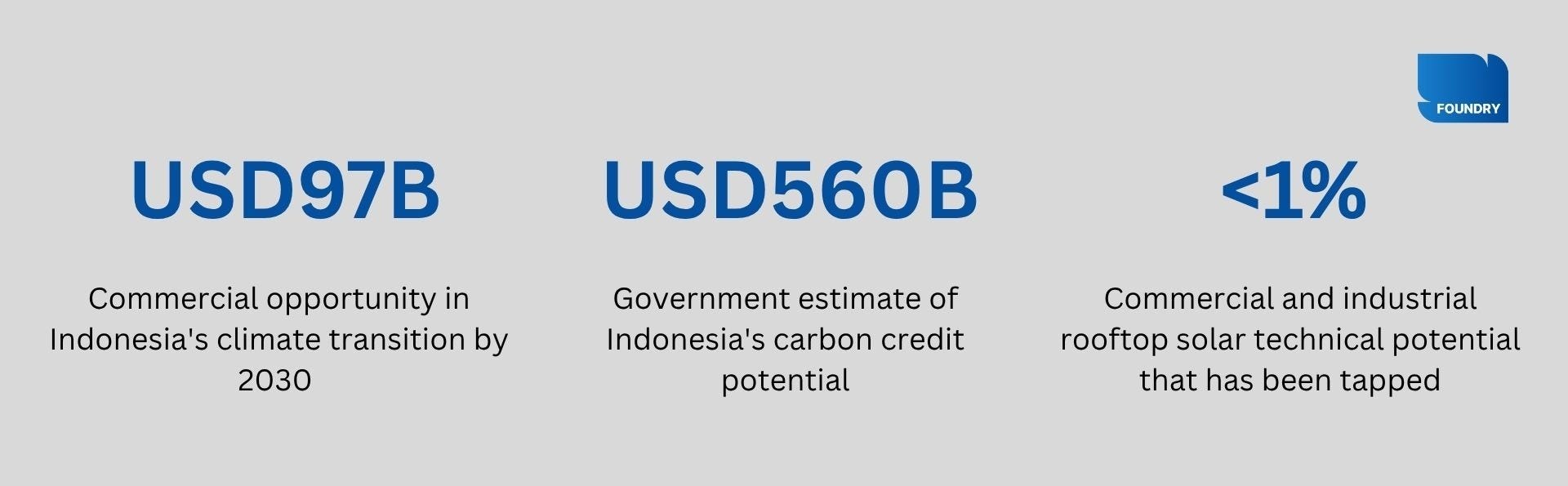
Three numbers point in the same direction. Together, they show not just the scale of the opportunity but how much of it is already operational.
Traceability Has Shifted Where Waste Value Is Captured
Indonesia generates around 70 million tonnes of waste each year, as corporate demand for traceable recycled materials increases with 20 to 40 percent recycled content targets. Waste no longer stops at collection. It is now directed toward buyers who require traceable materials. Extended Producer Responsibility and ESG reporting requirements are turning recyclable materials into inputs that must be proven.
This is where value shifts. It is no longer defined by who collects, but by who controls the flow and owns the data. That demand has translated into repeat transactions, particularly from FMCG and export-oriented companies that require traceable recycled inputs for compliance.
Rekosistem demonstrates this logic in practice. The platform connects households and informal collectors into a single traceable flow, producing compliance-ready documentation for more than 225 corporate partners. This demand from corporate buyers is what drives the platform’s scale to more than 70,000 users and 36 million kilograms of emissions tracked.The data layer, which records material provenance at each handoff, supports compliance documentation for corporates while improving demand stability and pricing for collectors.
The model integrates material value into formal supply chains and produces documentation that meets ESG reporting standards. Demand is driven by compliance. Contracts become clearer. Data becomes monetizable.
Removing Upfront Cost Has Turned Solar Into an Operational Decision
The same commercial logic is reshaping energy procurement. Systems are now installed with no upfront cost and paid through long-term contracts, typically spanning 10 to 25 years, providing price certainty and making the model financially predictable. The decision shifts from capital allocation to procurement.
Under this structure, savings of 10 to 30 percent are achievable without upfront capital, making solar procurement comparable to other operating costs.
With more than 99 percent of technical potential still available, commercial and industrial solar adoption remains at an early stage.
Xurya has deployed more than 300 commercial and industrial solar projects under long-term contracts, with revenue defined through those agreements rather than projections. Each installation also generates a consistent emissions baseline, providing the kind of emissions record that carbon markets will need to price.
Data Is Accumulating. Pricing Will Follow
Companies managing waste generate traceable material data. Companies adopting solar generate consistent energy records. Together, these build the measurement layer that emissions accounting requires.
Indonesia’s carbon economy is projected at $560 billion. As of August 2025, recorded transactions on IDXCarbon totalled around $73,000, consistent with the early formation stage of exchange-based carbon markets elsewhere. At this stage, standards are forming, buyer demand is consolidating, and buyers are still determining which credits they trust.
In markets at this stage, the accumulation of verifiable data shapes participation as standards consolidate. Value is being built through measurement before pricing develops.
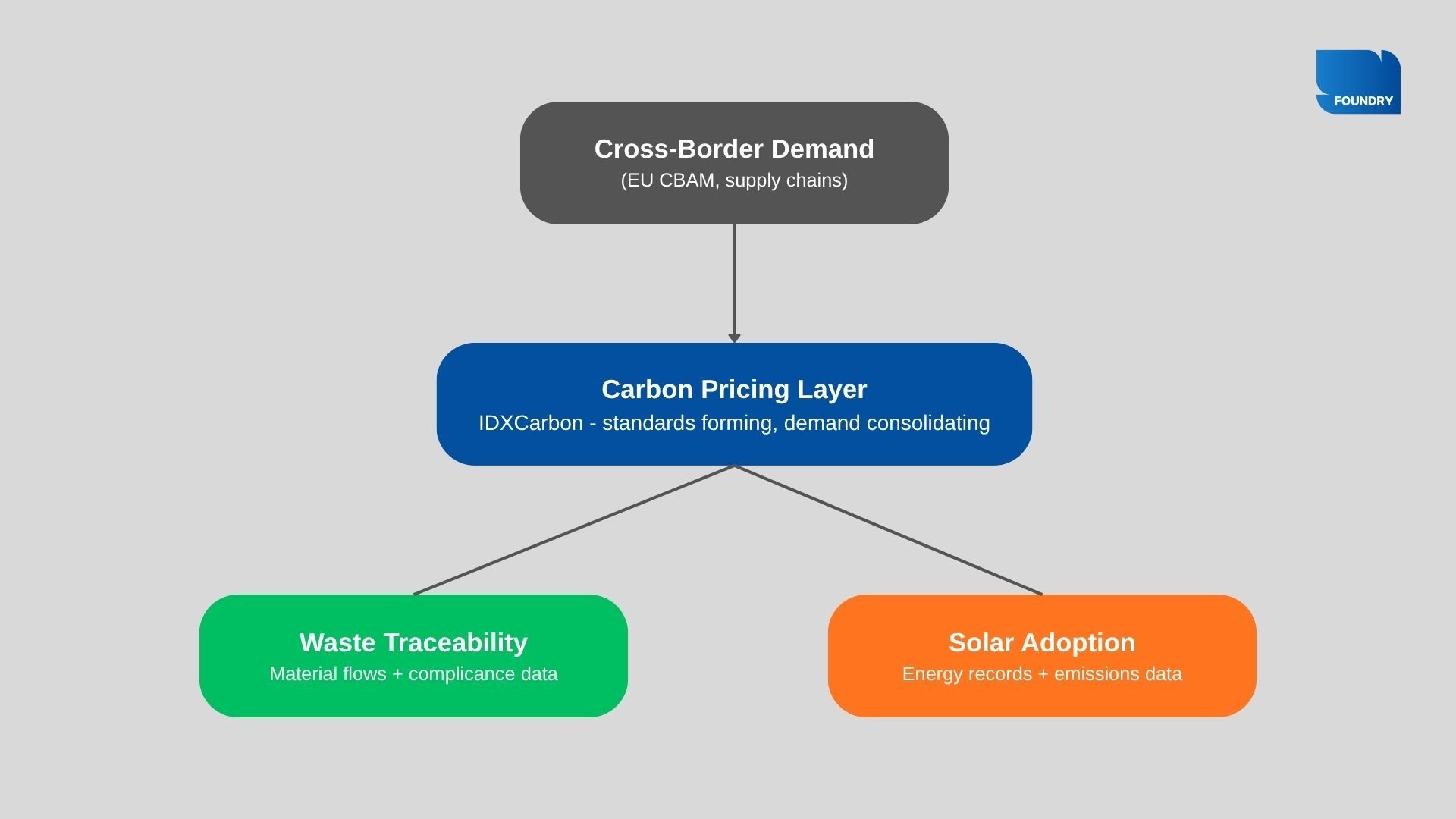
What is emerging is a set of interconnected activities, each generating the inputs the next layer requires. Waste generates material flows and compliance data. Solar adoption generates measurable energy use and emissions baselines. From this, emissions can be calculated. As demand develops, carbon becomes the pricing layer that connects them.
External pressure is compressing the timeline across all three layers. Cross-border mechanisms such as the EU’s Carbon Border Adjustment Mechanism are beginning to shape demand, particularly for export-oriented industries. At the same time, supply chain requirements and domestic energy considerations are accelerating the shift.
The record is being written now, and whoever holds it will set the price.