
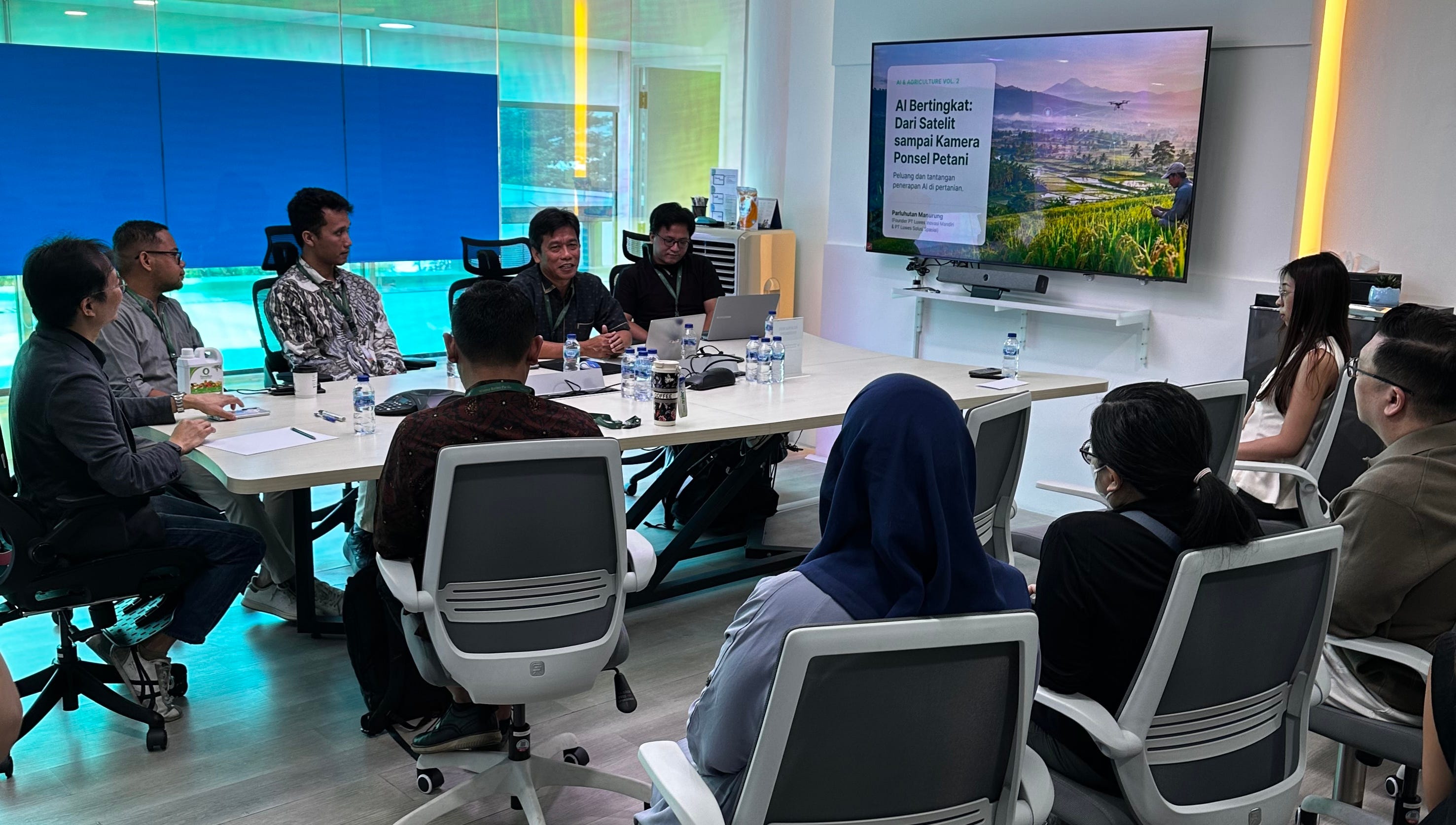
Foundry Collective just held another roundtable on Tuesday, September 15, a short, open session digging into how AI is reshaping Indonesia’s agriculture sector.
Under the theme “AI in the Agriculture Sector: Opportunities and Challenges”, the session brought together Andreas Surya, Partner at Kejora Capital, alongside two founders with real-dirt-under-the-nails experience in the sector: Parluhutan Manurung, Founder of PT Luwes Inovasi Mandiri and PT Luwes Solusi Spasial, and Rahadyan Teja Sukma, Founder of TanaBur, an organic liquid fertilizer manufacturer.
Two founders, two different starting points
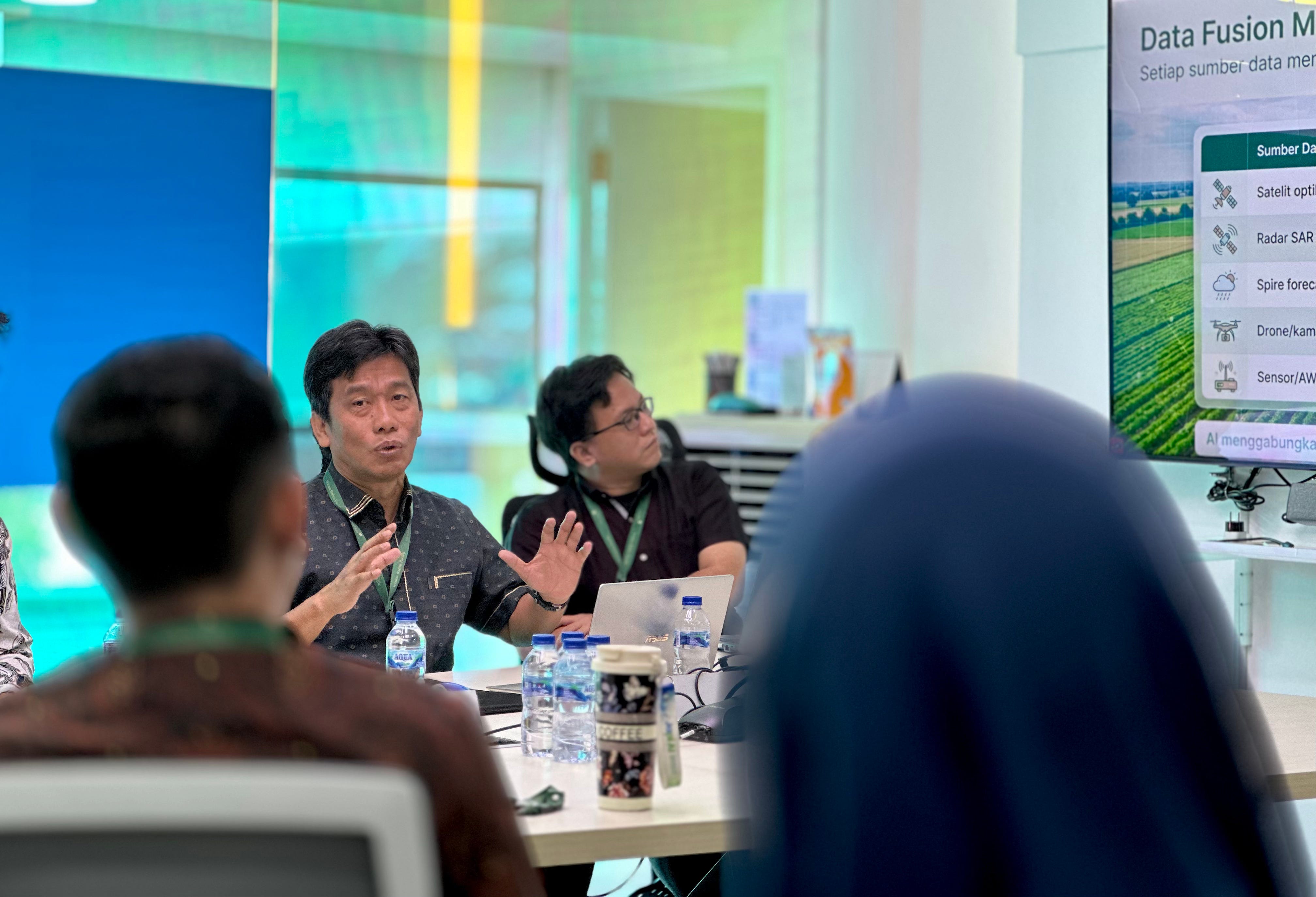
Both founders walked through the audiences on everything we need to know about the current agricultural landscape that leads to how AI factors into reading soil conditions.
Parluhutan, during the first session, points three things on the sector’s complexity, namely location, timing, and context, factors that don’t fit nearly into a single model. “That’s exactly why AI needs to sit at the core,” he said, explaining how it pulls together scattered data sources so the sensor could read and turn into an actionable recommendation.
With that vision, he showcased two tools built around that, Nowcasting AWS, which uses satellite data to help predict soil moisture, and GoAgri, an app-based solution to help farmers determine the right fertilisation window.
Rahadyan continued the session with a different framing, at least to start, “What happens when AI meets actual soil conditions in the field?” AI, he noted, does not physically touch the soil so it has no built-in sense of a field history or context. The right approach isn’t to jump straight to a recommendation for farmers, but to first understand.
That’s the premise behind TanaBur: what if AI could actually “see” see the soil? By combining soil and weather data with image-based growth observations and the practical experience farmers have, TanaBur aims to optimise field-level decisions with AI as a supporting layer.
As he put it, AI isn’t about delivering one perfect recommendation, it’s a learning system that evolves with each plot of land and each farmer working it.
To conclude, their case studies show a useful lens for other innovators or builders in the space trying to figure out where AI, specifically, can actually add value and fit into a much more complex as a tool.
The session closed with a Q&A, where participants pressed both speakers on farmer readiness, adoption barriers, and business models.
Where the opportunity lies
As an agrarian nation, agriculture plays a crucial role in food security and remains one of the primary sectors underpinning Indonesia’s economy. The sector contributed 18.1% to national GDP in 2025, per Statista.
Yet, it also remains among the least digitised. A recent study on smallholder digital adoption found that despite years of digital initiatives, uptake among Indonesia’s smallholders farmers remains low. They still most rely on basic mobile phones, rather than tools for production, which are held back by uneven infrastructure, limited technical skills, and cost.
The through line from this session: the real promise of AI isn’t perfect answers, and certainly is not about replacing them for algorithms. It’s about building tools that can earn their trust before adoption.
***