Dear Subscribers,
Welcome to Foundry Digest, the new weekly newsletter from Foundry Collective, designed to be your essential source of insights, data, and key information on Indonesia’s technology and investment landscape.
Each edition will focus on the real sectors of Indonesia’s economy, delivering actionable intelligence on emerging innovations and investment opportunities. For our inaugural issue, we’re starting with a deep dive into the agriculture sector.
Here’s what you can expect in every edition of Foundry Digest:
Inspiring Story: A featured interview with a leading innovator, exploring the fundamental challenges they’re solving and the unique solutions they’re building.
Data & Insight: Curated, up-to-date data that highlights critical trends to support your strategic decision-making.
Industry Dynamics: A roundup of relevant updates, including key industry movements, regulatory changes, and market analyses.
Whether you are tracking the next wave of innovation, scouting for investment opportunities, or shaping policy. Foundry Digest is your brilliant weekly companion for deep, actionable perspectives on industry dynamics.
Cheers to staying ahead of the curve,
The Foundry Team
🚀 Inspiring Story: Rebuilding Investor Confidence in Agritech with a ‘Big Volume, Low Risk’ Thesis
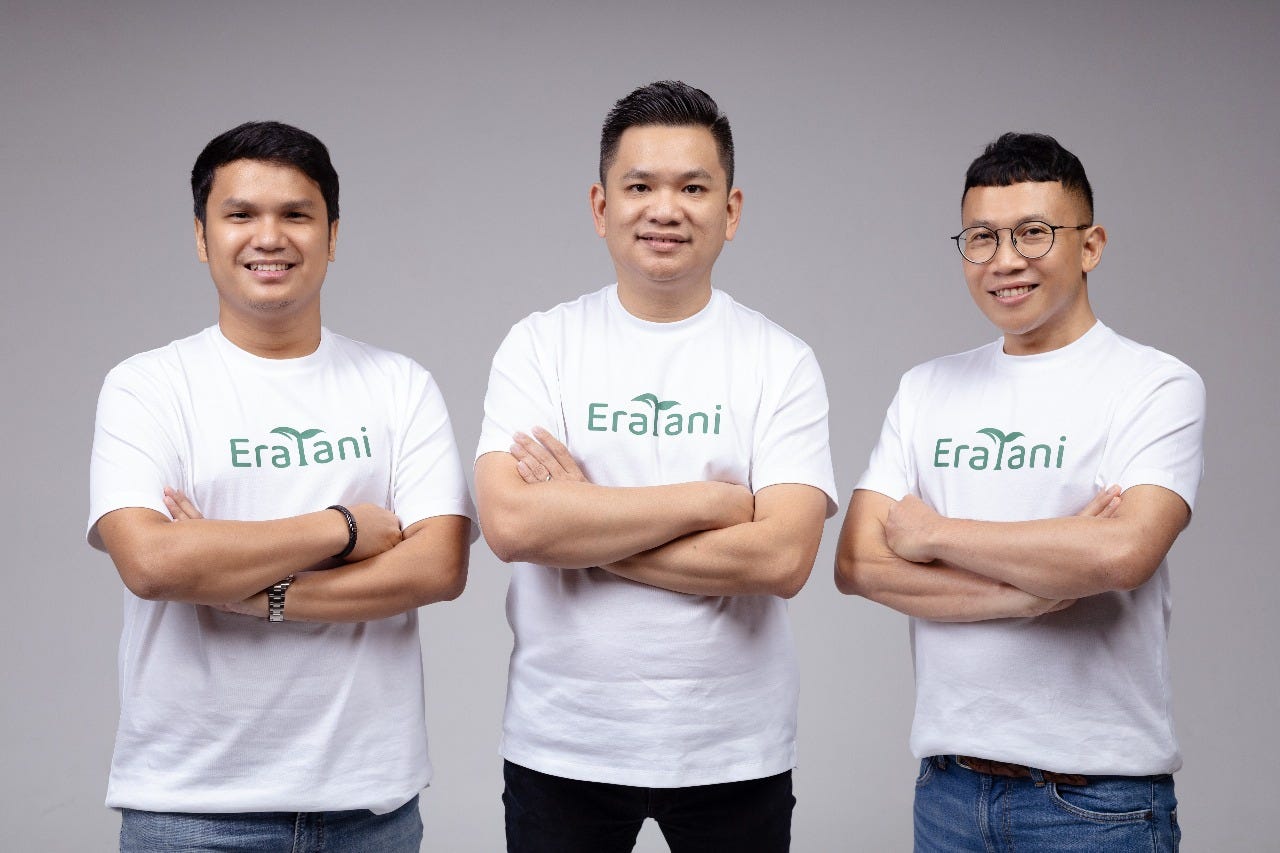
Indonesia’s agritech scene is still rebuilding trust. High-profile stumbles by early players that pursued sprawling, aggressively funded ecosystems have left many investors cautious. What the market needs now is a sober narrative and an operationally grounded model.
Eratani, an agritech startup focused on solving farmers’ structural challenges, is taking precisely that path: an unglamorous yet durable strategy centered on rice, the country’s staple, guided by a “big volume, low risk” thesis.
Founded in 2021, Eratani has since managed more than 13,000+ hectares of rice fields and partnered with over 34,000+ farmers. To accelerate its growth, the company has also raised over US$13.6 million from prominent investors such as Clay Capital, SBI Ventures, AgFunder, Genting Ventures, Kejora Capital, and several others.
Co-Founder Bambang Cahyo Susilo outlines how Eratani aims to build a sustainable business while helping restore investor confidence in Indonesia’s agritech story.
The Pitfalls of a “Valuation Play”
Bambang is frank about what went wrong for some predecessors, including Tanihub and Crowde. Too many, he argues, were drawn into a “valuation play,” chasing breakneck sales growth beyond their true operating capacity.
“In chasing sky-high valuations, many pushed for breakneck sales growth — far beyond what they could actually handle,” he says.
That approach, he adds, does not translate to agriculture. Agritech is not pure tech. Technology is a risk-mitigation tool, but operations remain labor-intensive and field-heavy.
“Agriculture is not a tech company. Tech is just another tool. It still requires intense human interaction and extensive operations,” Bambang stresses.
Trying to control the entire value chain from insurance and financing, to logistics and distribution, across multiple commodities without the right team or know-how, is a recipe for failure. The complexity and risk climb quickly.
Focus on Rice
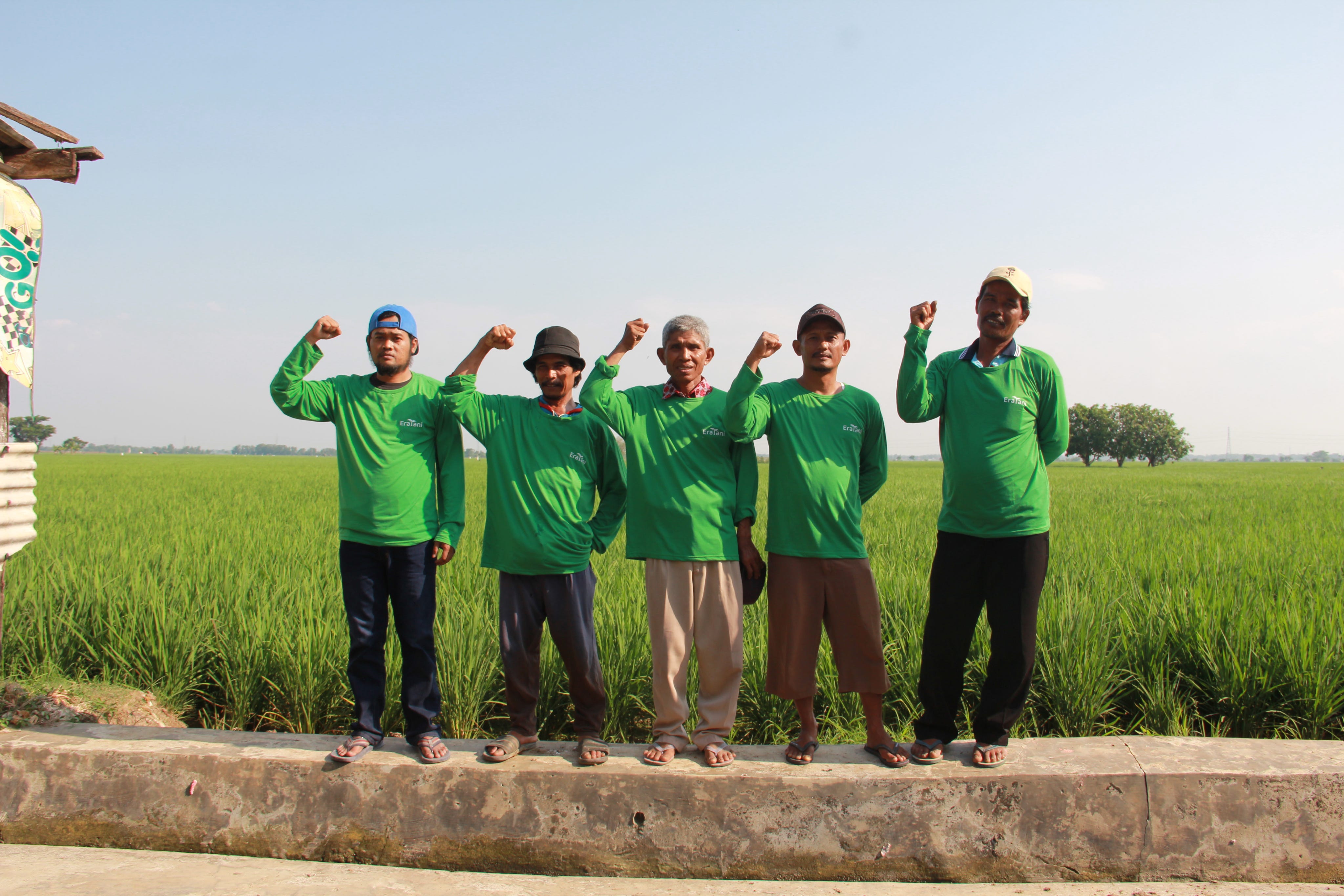
Instead of attempting to fix all of Indonesian agriculture at once, Eratani focuses on one commodity: rice. It may not be “sexy” given the thin margins, but the fundamentals are compelling.
Big volume. Indonesia is the world’s fourth-largest rice producer and one of its biggest importers. Roughly 90% of global rice consumption is in Asia. The volume is immense.
Low risk. Rice prices are relatively stable compared with volatile horticultural crops like chilies or shallots. Bambang notes that rice rarely swings more than 5%; we don’t see prices jump from IDR12,000 to IDR40,000 per kilogram overnight. That stability eases planning and reduces price risk for both farmers and companies.
The market also remains fragmented. “No listed company in Indonesia holds more than 2%-3% market share. The market is still wide open,” Bambang says.
Eratani’s operating model is built around three integrated pillars that address structural frictions from upstream to downstream:
Empowering Access to Finance. Eratani does not lend directly. Instead, it acts as a bridge connecting farmers to formal lenders. The company has developed its own credit-scoring system that aggregates granular land and farmer data, giving banks confidence to finance previously “unbankable” borrowers. Disbursements don’t arrive as cash; they’re channeled via standing instructions to purchase the right inputs through Eratani, reducing leakage and ensuring fit-for-purpose spending.
Local Agronomic Support. Eratani hires local agronomists to stay close to the fields, often regional university or agricultural-vocational graduates, who visit farmers roughly every 10 days to monitor fields and provide recommendations. For accuracy and accountability, agronomists must check in on-site with precise GPS coordinates and upload selfies with the farmer and plot conditions. This “local touch” builds trust and improves adoption.
Better Market Access and Cheaper Inputs. On the demand side, Eratani acts as an off-taker, buying partner farmers’ harvests and selling directly to manufacturers, cutting out intermediary layers. Upstream, the company procures fertilizer and other inputs straight from producers and passes savings to farmers, claiming prices roughly 10% lower than local farm shops by removing multiple supply-chain tiers.
Healthy Unit Economics
Eratani currently enforces a minimum landholding of half a hectare, strictly a unit-economics decision. Serving a 0.3-hectare farmer costs nearly the same in field support and administration as a larger plot, yet the loan size and transaction value are far smaller. To build a company that is both sustainable and impactful over the long term, the business model must be profitable first.
“Impact that lasts only happens if the company is sustainably profitable,” Bambang says, arguing that farmers with very small plots are better served by government programs with a stronger social mandate.
In the short term, his mandate is clear, “My immediate job is to run the company with a profitable, disciplined system. That operational and financial success becomes my proof point to restore global investor trust in Indonesia’s agriculture sector.”
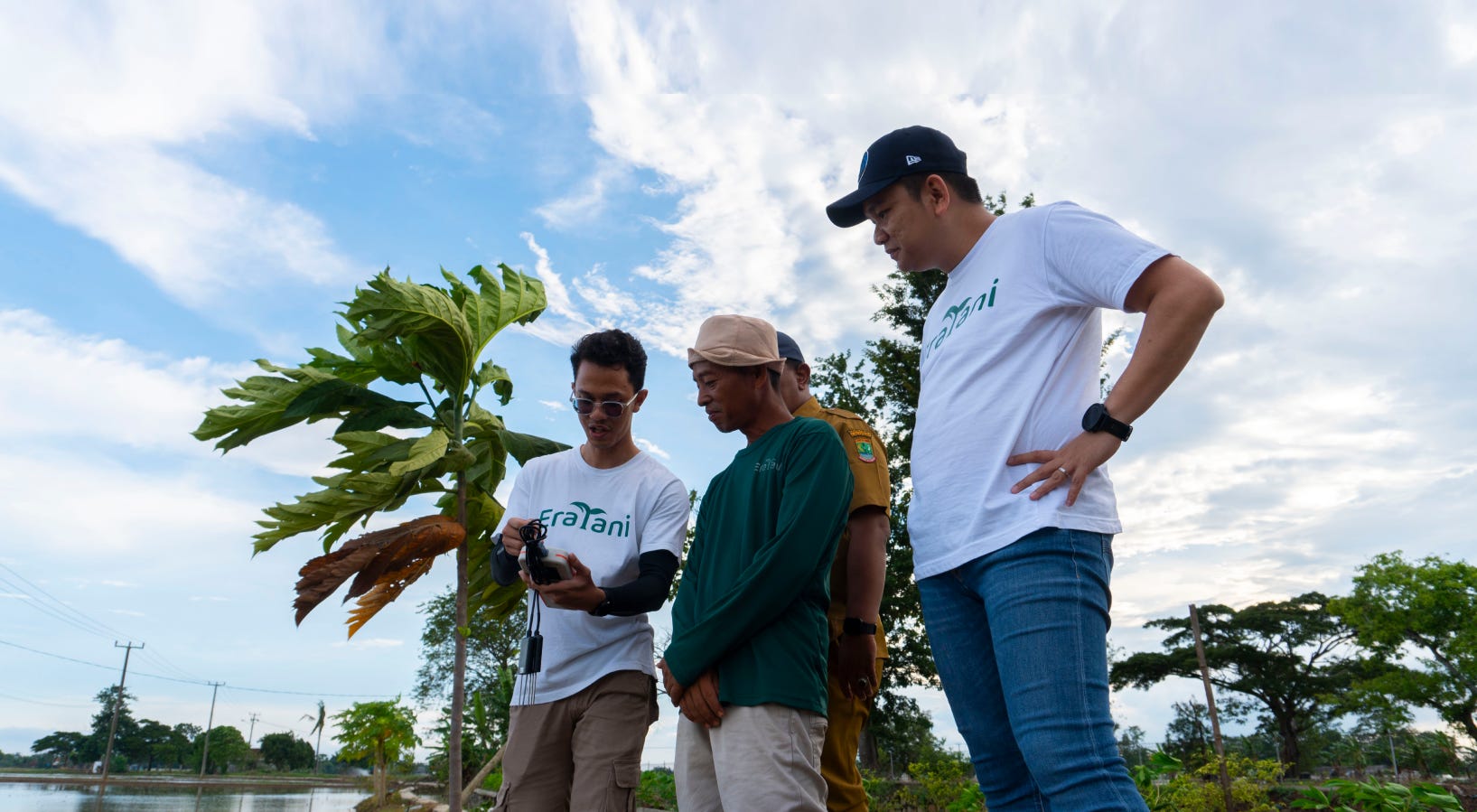
Medium-term, Eratani plans to deepen integration with practical technologies like drones to lower spraying costs and strengthen risk coverage beyond crop insurance to include health and life insurance for farmers. The long-term vision is a fully integrated, zero-waste rice company that can eventually go public, spanning upstream to downstream.
Why This Matters for Investors
In a market fatigued by over-promise and under-delivery, Eratani’s rice-first, “big volume, low risk” play is a back-to-basics strategy built on operational discipline, repeatable processes, and healthy unit economics. It prioritizes scale where it exists (rice), reduces volatility (stable pricing), and focuses on practical enablers (credit rails, agronomy, input efficiency, and assured offtake) rather than empire-building across many commodities at once.
If Indonesia’s agritech revival is to be durable, it will likely be led by companies that compound trust day-by-day in the field, not by chasing vanity metrics. Eratani’s fundamentals-driven approach offers one blueprint for sustainable growth, and a credible path to rebuilding investor confidence in the sector.
📊 Data & Insight: Agritech is still attractive to investors
Amid a stark downturn in startup funding across Southeast Asia, which saw a 43.5% year-on-year decline in H1 2025, the agriculture sector has emerged as a notable bright spot, continuing to capture significant investor interest. During this period, the sector secured 7 deals, predominantly in early-stage funding rounds. This trend serves as a promising indicator of sustained investor confidence in Indonesian agricultural innovation and the significant economic value it is poised to generate in the future.
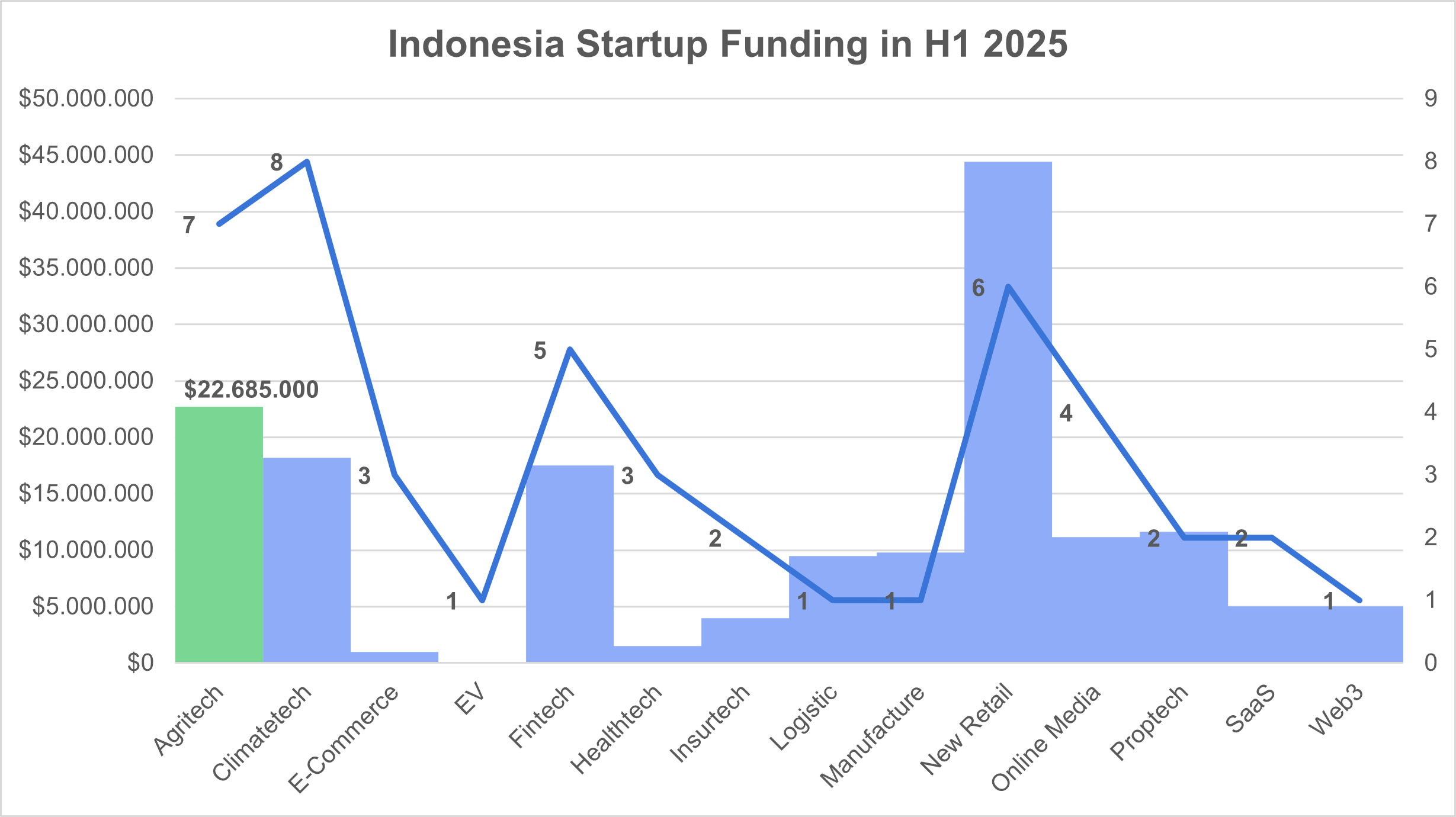
It is undeniable that several cases in recent years (such as Tanihub, Crowde, and eFishery) have cast a somewhat negative perception on the agricultural tech industry. However, if we refer to the actual on-the-ground conditions, the fundamental problems—which can be reframed as opportunities—remain widespread and deeply rooted. What Eratani is doing, as mentioned above, is a prime example: addressing supply-side issues by ensuring the quality of the production process, while simultaneously securing demand through efficient channels for harvest uptake.
This opportunity is significantly amplified by strong governmental backing. As outlined in the recent presentation from the Coordinating Ministry for Food Affairs, achieving Food Self-Sufficiency by 2027 is a top national priority. This ambitious goal is backed by concrete strategic programs—from intensification (providing superior seeds, fertilizers, and irrigation) to extensification (developing new food estates)—and is supported by a stream of new regulations designed to streamline and accelerate progress.
Therefore, innovation and regulation are now increasingly in sync. The government’s clear roadmap and tangible support create a fertile ground for agri-tech solutions that solve fundamental problems, making the sector more promising than ever for stakeholders who can navigate this aligned landscape.
⚙️ Industry Dynamics
Here are several interesting news update related to the agriculture topic in Indonesia that are worth exploring.
The Minister of Law emphasized that simplifying regulations—particularly reducing 143 rules related to fertilizer distribution across national and regional levels—is key to strengthening Indonesia’s food security, calling for cross-ministerial collaboration to eliminate sectoral silos and accelerate policy reform aligned with national food resilience goals. [Read More]
Indonesia’s new administration outlines a food-security push: RPJMN 2025–2029 prioritization, Rp155.2T (2025) for fertilizer, equipment, land intensification and Bulog stockpiles; early gains in rice/corn output; Inpres on four self-sufficiency hubs; and Rp164.4T (2026) to expand rice areas, irrigation and dams. [Read More]
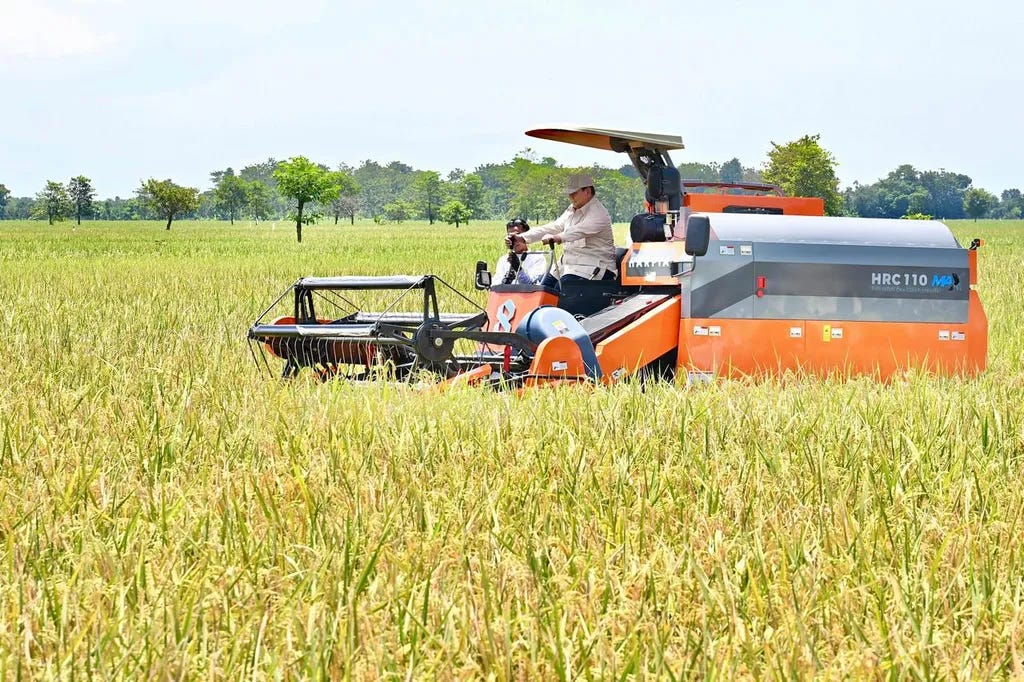
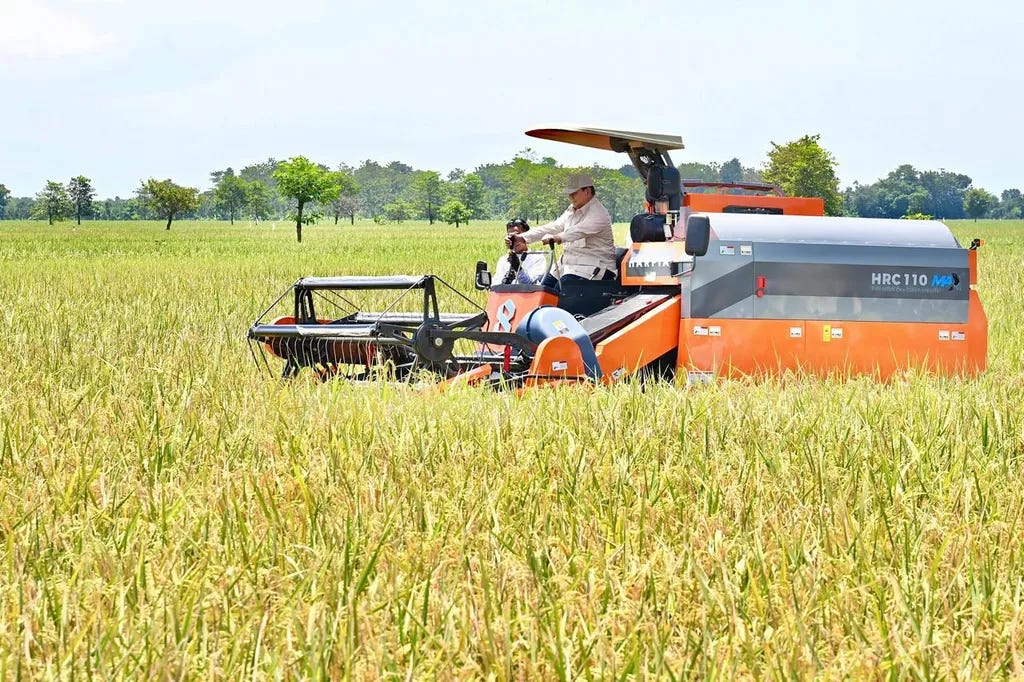
Indonesia’s president Prabowo Subianto push for local food security initiative / Doc. Seskab RI INA and Export Development Canada signed a Market Leader Partnership MoU in Ottawa (Sept 25, 2025), with EDC earmarking up to US$600M to co-finance INA-led projects in infrastructure, cleantech, and agrifood, deepening Canada-Indonesia trade and investment. [Read More]
Bank DBS Indonesia and its partners marked World Food Day 2025 by advancing national food resilience through blended finance, farmer upskilling, food waste reduction, and climate-focused initiatives supporting over 2,000 farmers and rescuing more than 1.36 million kg of food to improve access, sustainability, and livelihoods across Indonesia. [Read More]