
Dear Subscribers,
Welcome to Foundry Digest, your weekly briefing from Foundry Collective on Indonesia’s technology and investment landscape.
In this edition, we explore key supply chain challenges in agriculture, highlight data on the sector’s significant credit gap, and share the latest industry dynamics.
Whether you’re tracking innovation, investing, or shaping policy, Foundry Digest delivers sharp, actionable insights to keep you ahead.
Stay ahead,
The Foundry Team
🚀 Inspiring Story:
Horticulture is Hard to Scale, Supply Chain Stability is the Missing Link
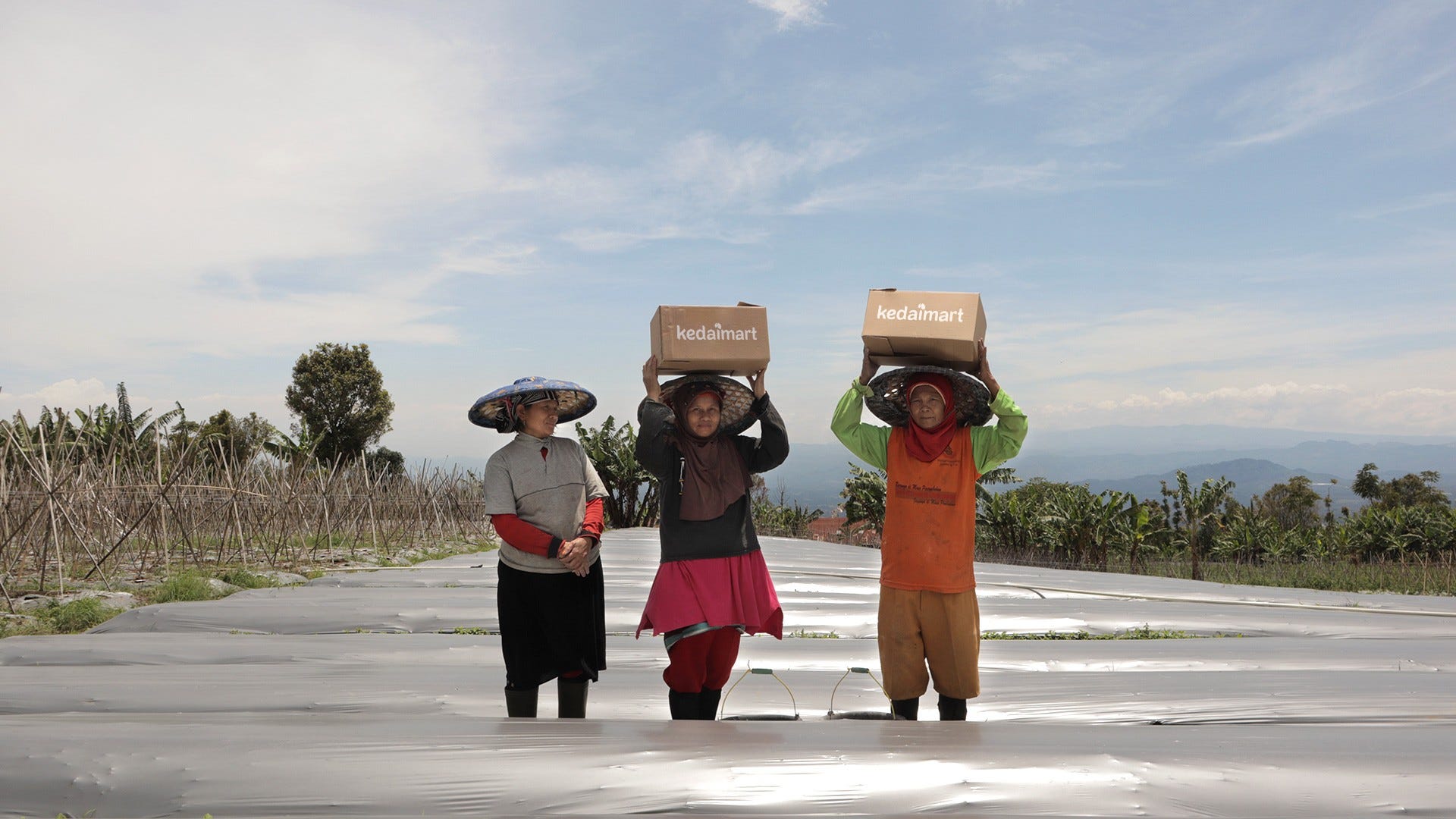
Scalability remains a core challenge for Indonesia’s horticulture sector. From chilies to melons, many upstream development efforts fail to reach meaningful scale due to inconsistent yields, fragile farmer institutions, and costly logistics. Yet the market potential is vast. Estimates put Indonesia’s horticulture market at around IDR 1,500 trillion (USD 90 billion) annually, while per-capita fruit consumption remains roughly 50% below the World Health Organization (WHO) standard.
Amid these headwinds, Kreasi Pangan is redesigning its playbook to balance upstream and downstream in a more realistic way. Formerly best known for its Kedai Sayur online-grocery service, the company has transformed into an integrated agriculture enterprise, covering everything from farm-gate sourcing to last-mile distribution.
Established in 2018, Kreasi Pangan now works with over 400+ farmer partners, 600+ B2B partners, and serves more than 80,000+ active consumers. The company has raised funding from Kejora Capital, East Ventures, SMDV, Triputra Group, and Multi Persada Nusantara.
“Production isn’t the only problem—it’s consistency of supply and guaranteed offtake,” said Adrian Hernanto, Founder & CEO of Kreasi Pangan. Many programs fail, he noted, because they focus on boosting output without securing distribution. “Once quality and volume become unstable, buyers walk away and the supply chain collapses.”
Fragile Institutions, Slow SOP Adoption
According to Adrian, weak farmer-level institutions are a major bottleneck. Cooperatives often struggle to endure due to leadership turnover and poor record-keeping. The industry, however, requires continuity and reliable supply to sustain long-term contracts.
Standard operating procedures (SOPs) also remain unevenly applied. Many farmers have yet to see the economic value of strict compliance, especially when higher yields and margins haven’t been proven in the field.
“SOP adoption needs clear proof that outcomes and margins improve. Only then can you scale,” Adrian explained.
After testing several upstream approaches, Kreasi Pangan chose to build logistics foundations first to cut waste, secure volumes, and shorten distribution chains. “If supply and logistics aren’t strong, scaling production only creates more waste,” Adrian said. In his view, improving logistics systems and demand forecasting has a more immediate impact on price stability than expanding planted area.
Greenhouse Melons: A Replicable Small Model
One innovation under trial is greenhouse-grown melons in East Java. The system enables tighter control over quality, flavor, and harvest frequency. Produce is sold across grades, from premium fruit for fresh markets to lower grades for juice, minimizing waste.
With more than 20 greenhouses operating, early results are promising. “Farm-gate prices can be IDR 10,000-12,000 per kilogram, while retail can reach triple that. It shows how supply-chain efficiency can directly lift farmer income,” Adrian said.
Kreasi Pangan is also building digital tools to track SOP steps and forecast demand, aligning planting schedules with market needs and reducing oversupply risk. Next, the company plans dedicated financing schemes to accelerate greenhouse expansion. With the right capital and mature SOPs, the model could be replicated for other commodities.
Building Resilience from the Ground Up
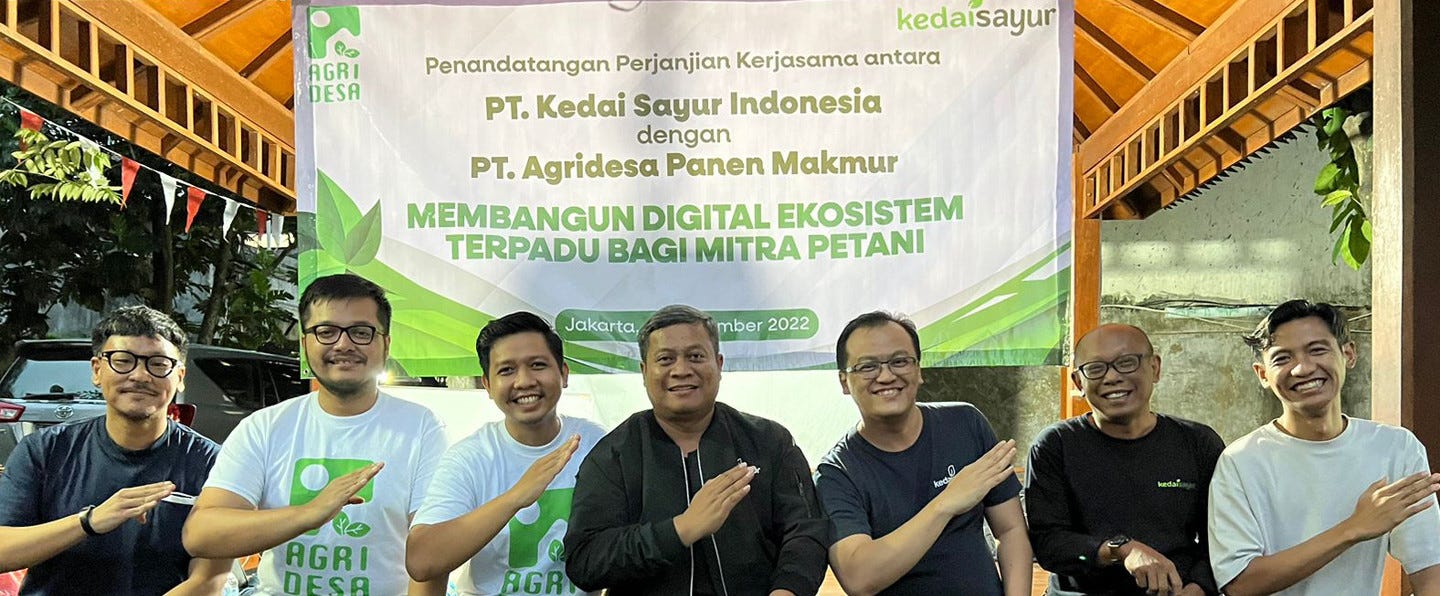
Adrian believes agricultural transformation can’t be achieved through short-term projects. “We have to be realistic, food resilience is built on efficient supply chains and low waste. Only after that should we talk about expansion,” he said.
Kreasi Pangan’s approach underscores that scaling horticulture is not just about production. It is about reliability, predictability, and partnership. By starting with market and logistics, the company aims to build a more shock-resistant ecosystem, an essential foundation for Indonesia’s food future.
📊 Data & Insight: Significant Financing Potential to Elevate Farmers
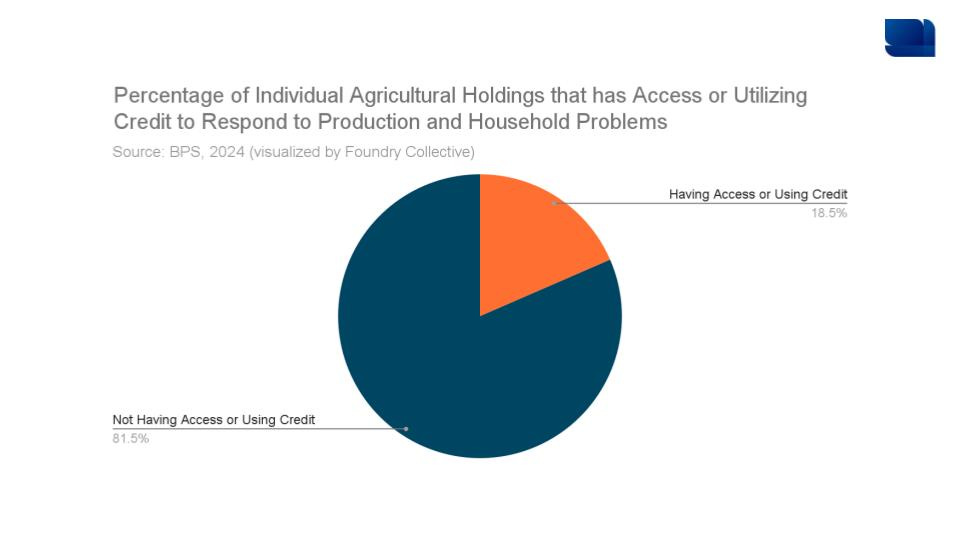
Data from Indonesia’s Central Bureau of Statistics (BPS) reveals a significant credit gap in the agricultural sector: a mere 18.5% of individual farmers have access to or use credit. The vast majority, 81.5%, are left financially excluded, unable to secure formal loans to address production challenges or household needs. This gap represents a major hurdle, but also a clear opportunity for financial innovation to drive change.
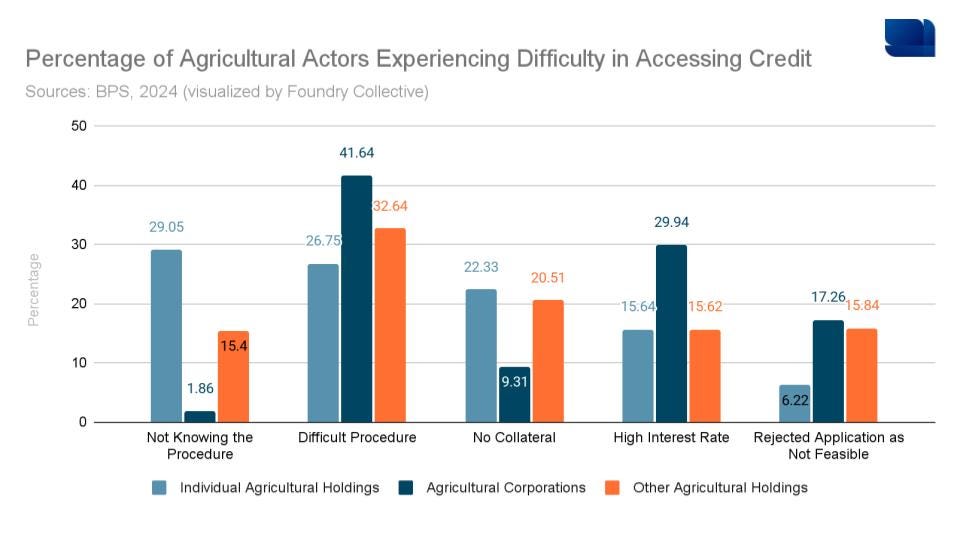
The main barriers are clear and addressable. Farmers cite difficult procedures (41.64%), lack of knowledge about the process (29.05%), and absence of collateral (20.51%) as their primary obstacles. These are precisely the problems that fintech and digital finance platforms are built to solve. By streamlining applications, using alternative data for credit scoring, and offering mobile-based services, these innovations can directly bypass the traditional bottlenecks that have long excluded smallholder farmers.
The future of agricultural finance is not about forcing farmers into a rigid system, but about adapting the system to fit them. Fintech can leverage data from satellite imagery, transaction histories, and mobile payments to create tailored financial products. This allows for more realistic risk assessment, competitive interest rates, and flexible repayment schedules aligned with harvest cycles, simultaneously boosting both financial inclusion and literacy.
The conclusion is straightforward: this credit gap is solvable.
While the challenge is significant, the potential for technology to bridge it is even greater. With the right innovative solutions, we can transform Indonesian agriculture. The path forward is one of collaboration—where innovator, government, and agricultural stakeholders work together to build a more resilient, productive, and financially inclusive sector. The tools to solve this problem are already here; now is the time to deploy them boldly.
⚙️ Industry Dynamics
Here are several noteworthy agriculture-related news updates from Indonesia worth exploring.
President Prabowo Subianto reaffirmed that food security will be the central priority of his administration’s first year, calling it the most strategic pillar for national resilience. He has signed a decree to establish food self-sufficiency zones nationwide under the Asta Cita mission, aiming for full self-sufficiency by 2028 while rejecting reliance on imports. The government reported that rice production in 2025 is projected to rise 13.54% to 34.77 million tons, a milestone attributed to Prabowo’s agricultural policies. [Read More]
ADB unveiled its 2025–2029 Country Partnership Strategy for Indonesia, aligning with the national Asta Cita agenda to accelerate inclusive, resilient, and sustainable growth through three pathways: investing in people, boosting competitiveness, and enhancing resilience and sustainability (clean energy transition, power grid modernization, and stronger energy-water-food security via higher agricultural productivity, irrigation, logistics, and support for the free, nutritious meals program), with crosscutting priorities in women’s empowerment, digitalization, governance, and regional integration. [Read More]
Askrindo, part of IFG, is partnering with Tugu Insurance on an agritech-powered co-insurance scheme to protect farmers with modern index/parametric coverage—allowing faster, data-triggered payouts (e.g., rainfall or yield thresholds), lowering admin costs, and expanding reach. The initiative aims to boost insurance literacy and inclusion, support national food security under the Asta Cita agenda, and address climate-driven risks; Askrindo’s concept was also named runner-up in the 2025 Inclusive Insurance Challenge Fund. [Read More]
Eratani, a farmer-centric agritech startup, has partnered with PT Casagro Futura Pratama to improve agricultural productivity and soil health in Indonesia. Through the use of Casagro’s high-carbon organic fertilizer, the collaboration aims to reduce chemical fertilizer dependency by up to 50% while boosting yields by 25–30%, based on 2024 trials. This initiative supports sustainable and climate-resilient farming practices, aligning with Eratani’s mission to enhance farmers’ welfare and long-term land productivity nationwide. [Read More]